Why I am going to General Conference

In late February, I am heading to St. Louis for General Conference. For those unfamiliar with the United Methodist Church, General Conference is a gathering of elected representatives for the global United Methodist Church. Although, I’m not one of those elected representatives, I love our church and want to be there. The session was called to address the church’s stance on human sexuality. They will be deciding on whether the church will ordain practicing homosexuals and allow same-sex marriages in our churches. They will consider three options for moving the church forward. There is much more to learn about General Conference than I have time to cover in this post. Learn more here. 

I have asked myself, “Why am I going?” For one, I have never been to General Conference and I’d like to see one as monumental as this one. Another reason is that I want to be where the action is. A friend told me a while back that if you want to become a good theological journalist, go to the action. Be in the room where it happens. But as I have thought more about it, the deeper reason is that I need to go where the pain is. Several people have told me not to go because I’ll see the worst of the church. My hope is that in the midst of the pain, I’ll be moved with mercy.

As I remember the story of the good Samaritan from Luke 10, I recall that the Samaritan  was moved to mercy because he came near the hurt of the bleeding man on the roadside. The issue of homosexuality has torn apart my beloved church. It feels like she’s in the ditch on the roadside bleeding. I want to come near where her pain is. Many view the only way to heal the wound is to split. But as I remember the story of the good Samaritan, I remember how he poured on the healing ointment, bandaged the wound and after a few days of rest, the healing took place. My hope and prayer for the church is that there is enough healing ointment left in the bottle.

Like most people, I have wrestled with how I feel about these issues. If I had written this post 5 years ago, I would have taken a traditional stance as much as that would have pained me. I found it hard back then to interpret the scriptures in a way that condoned same-sex marriages and the ordination of homosexuals. Since that time, I have changed my mind. I have re-read those scriptures and I do find other interpretations compelling. For instance, was the story of Sodom and Gomorrah from Genesis 19 about the evils of homosexuality or the evils of rape? I think it’s about rape.

More than anything, my heart has been moved by the great pain and doubt I have witnessed in many family and friends who are gay. They have struggled with their identity, their worth, their place in the church. I can’t bear to see it, nor do I think the God I have known all my life can either.

As I read the gospels, I read about the Jesus who said ‘woe to you experts of the law…because you have hindered those who were entering’ (Luke 11:52). I guess, what I mean is Jesus was hardest on the people who were sure they understood the teachings of the law and used those teachings to exclude. Jesus told them plainly they were wrong and needed to rethink who God included into the kingdom. Jesus would show throughout the gospel how expansive his heart was towards those pushed to the margins.

I have great faith that friends and loved ones who disagree with me (and I know there are many) do so out out of a love for the scriptures and a love for God. I pray you would extend the same sentiment towards me. I have changed my mind. I find today that changing your mind can come across as weak. But the more I read the scriptures, the more I see God changing people’s mind, like Paul who changed from being the great persecutor of the church to the great evangelist of the faith (Acts 9). Peter had his world rocked when God told him he could eat what the law had  prohibited. (Acts 10).

I’m looking forward to heading out to St. Louis. My prayer is the Holy Spirit will guide us. Whether people agree with me or not, I send an olive branch to you and say we can still be part of the same United Methodist Church we love. Whatever change may or may not happen, may we all abide in love for God and each other. May the healing ointment pour freely.



The door’s open.

This morning I was heading to my church (Haygood UMC) to watch my 6 year old play basketball. A funny thing happened. A young boy ahead of me approached the church doors and tried to call the receptionist to open the door. There was no receptionist because it was a Saturday.

His dad looks at him and says, “Son, the door is open. You’re used to it being locked during the week when there’s preschool.”

The kid opened the door with a bit of curiosity on his face. It occurred to me that he was conditioned to think the door was locked, but indeed it was open. I thought to myself, “How many times does this dynamic happen to us? The door is open, but we are conditioned to think it’s locked.”

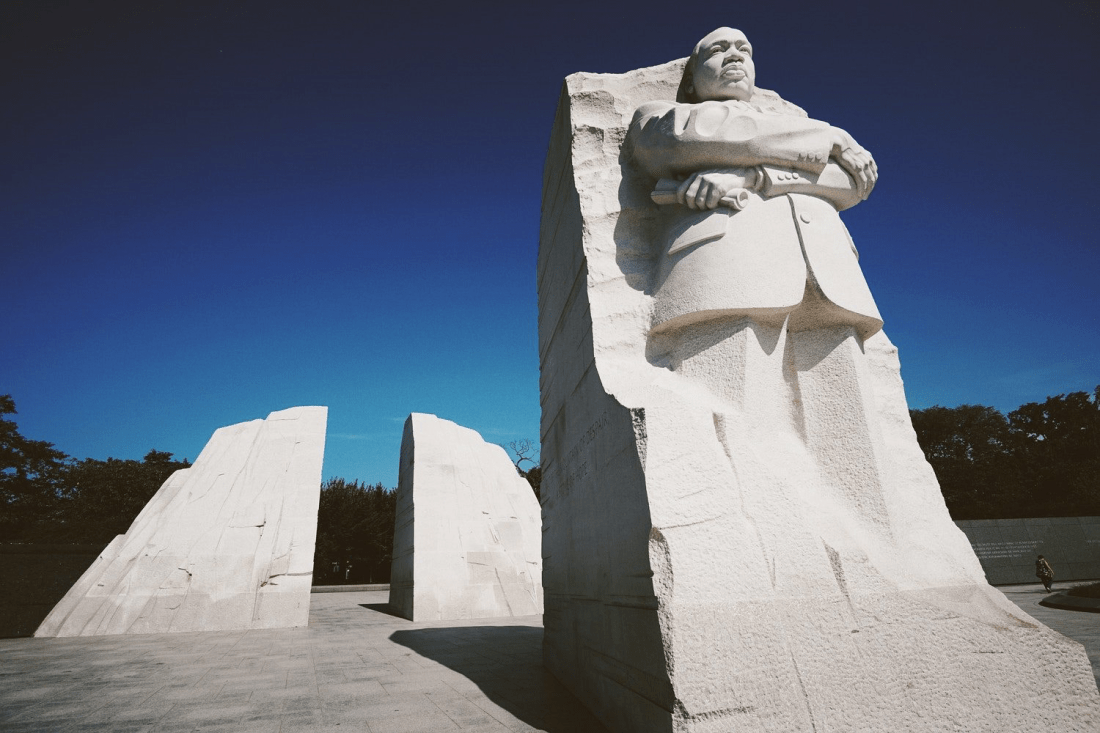
On this MLK weekend, I’m reminded that Martin Luther King Jr. was a leader who opened doors previously locked to African Americans. I’m sure there were moments along the journey that brave men and women who integrated schools and entered the polling lines for the first time approached those doors like that kid this morning thinking the doors were still locked. I’m thankful they are not. I stand in awe and humility of people who spoke out and witnessed like Jesus with non-violent protest, were beaten and even killed to ensure those doors are open today.

Lord, help me to do my part, repent of my sin, and use my position, to open new ones.

Happy MLK weekend!


Remember whose you are!

I learned a secret from a parent.  She has a son in high school. She said, “You wait! Kids are smart, especially on Instagram.”

I asked, “What do you mean?”

She said, “They’ll let you follow their public Instagram. You can keep up with them. At least you think you are keeping up with them. But what you don’t know is they have another Instagram account with a crazy name that you’ll never know about. That’s the Instagram their friends follow.”

Genius!

One of the continual struggles throughout the Bible is identity. It’s a struggle today too. Who are we? High school students set out to create identities and judge the worth of those identities by what others say. It’s a struggle for adults as they battle with themselves about their worth in relationship to their careers.

Who do we let see the real us? In the gospel of Luke Jesus is being baptized. When he was baptized on the Jordan River a voice from heaven says to him, “You are my Son, the Beloved; with you I am well pleased” (Luke 3:22). 

Jesus’ baptism marks the beginning of his public ministry. He is about to set out to save this world full of sin. Throughout his ministry, the devil and religious people will attack the quality that makes Jesus unique: his identity. They try to persuade him he’s not the Son of God.

Throughout our lives, the devil will attack us in the same place: our identity. We will feel insecure about who when we fail or when others make a snide remark that causes us to recoil.

That’s why God made sure Jesus heard these words loud and clear: “You are my Son, the Beloved; with you I am well pleased.” These same words are for you. Have felt like you’re not good enough? Are you unsure about the real you? The real you is beloved. Why? Because you are God’s child. Remember whose you are. You are God’s child. With you, God is well pleased.

I offer this invitation. If you need to be reminded you are a child of God, we will be remembering our baptism this Sunday (January 13) at the church I serve called Haygood Memorial United Methodist. If you have never been baptized and would like to consider being baptized and root your identity in the saving love of Christ, you are invited. Let me know. You are God’s child.

Why do we love sin so much?

In a previous church, I would, on occasion, use the well-traveled worship greeting:

“Good morning saints!”

The congregation would respond, “Good morning.”

And then I would say with so much cleverness, “Good morning sinners.”

And with zest they would say, “Good morning.” But there was one man in the pews who had a little too much gusto. When I would say, “Good morning sinners,” he would jump up and scream like a rabid football fan on fourth and goal, “GOOD MORNING!”

I would retort, “What did you do last night, Skip?” He seemed to have a little too much pleasure in his ownership as a sinner.

Why is it we love to sin so much? Sin is when we miss the mark. We do what’s wrong in the eyes of God.

I want to explore the difference between pleasure and joy. It’s my belief we often mistake the two.

I recall the story of Saint Augustine in his book Confessions. He writes about one of the first times he remembers sinning as a youth. He writes,

Close to our vineyard there was a pear tree laden with fruit. This fruit was not enticing, either in appearance or in flavor. We nasty lads went there to shake down the fruit and carry it off at dead of night, after prolonging our games out of doors until that late hour according to our abominable custom. We took enormous quantities, not to feast on ourselves but perhaps to throw to the pigs; we did eat a few, but that was not our motive: we derived pleasure from the deed simply because it was forbidden.

Augustine reminds us that sin entices us with its pleasure. Augustine didn’t need pears. He enjoyed the adventure of his sin. I recall my own first moments of rebellion. Can you?

As a fourth grader, I’d hang out at my friend’s house after school. His family had an apple tree. They lived on a busy highway near a curve. The drivers would whizz around the corner. My friend and I thought we’d have a little target practice with the apples. We started chunking these apples thirty yards or so towards these cars. I was getting pretty good at it. You almost have to throw the apple before you see the car in order to time it right. I remember hitting the first car. I hit it right on the windshield. Bullseye. I high-fived my friend. Then we looked up! There were brake lights. This lady pulled into to the driveway. We hid behind the house. She found his mother. To make a long story short, there was no apple pie that night. 

The point is that we didn’t throw those apples because we needed pitching practice for baseball. We did it because there was excitement and pleasure in it. We enjoyed it precisely because we weren’t supposed to do it. That’s the hard part about sin. It can seem exciting! 

Pleasure can get us into trouble. Maybe it’s that person who cuts you off in traffic. You know shouldn’t respond with your special gesture (especially with a kid sitting in the back seat), but boy it would feel good and give some temporary satisfaction. Or maybe there’s a whopper of an argument at the office. You know you shouldn’t join in the fight and excitement. However, it’s kind of entertaining and so you lob a few insults into the mix yourself. Or maybe you have neglected your spiritual life because you found more pleasurable things to do than read a devotional in the morning. You numb your mind on news stations and social media postings. There’s hardly any time for connection with God.

Sin can feel good. But that’s the problem. No matter how much temporal pleasure one may feel, sin always brings destruction. Think about it. What if that apple I had thrown had caused a car to wreck? What if jumping into an argument causes a person to lose a friend? Sin may bring pleasure, but sin never brings joy.

Joy is a gift of God. Joy is the experience of the eternal happiness of God. To experience joy, we must turn away from sin and its enticing pleasures. This Sunday at church, we’ll look at John the Baptist. He’s in the Jordan River calling people to repent saying, “You brood of vipers! Who warned you to flee from the wrath to come? Bear fruits worthy of repentance” (Luke 3:7-8).

John is often associated with the Christmas story. When John’s mother Elizabeth is pregnant with him, he begins to jump in his mother’s womb when Mary visits Elizabeth while she is pregnant with Jesus. John is to be the one who will prepare the way for Jesus and his ministry. Yet, John seems a bit like the cousin Eddie of the Christmas story. He’s rough around the edges and tells it like it is. And maybe John is the one to keep us honest during this season that can creep into sentimentality. John is reminding that our lives are out of sorts. When we change our lives and turn towards Jesus, then we will know the joy of the Lord.

Joy and pleasure are not the same. Joy comes from God and from our turning away from the sins of the flesh and all its pleasures. Is there joy in your life right now? There’s good news. You can find it this Advent season. Joy is not to be found in the seeking of pleasure, but through repentance and the seeking of God in a manger.


Make peace with your past.

My ethics professor at Duke, Stanley Hauerwas, had a sound bite. I can’t find the words in any of his books, but I remember him saying something to this effect: “The past is not the past until it’s been redeemed.” Those words have bounced around in my head  like a pinball machine for years.

Here’s what I think he meant.  If our past experiences haunt us in a way that still affect the way we live, they are not the past. Those experiences are very much part of the present. I have wrestled with this notion on both larger cultural issues and more personal ones.

For instance, I have wrestled with how slavery in the United States still impacts us today. It’s the original sin of our great country. Is slavery in the past? Yes. But it still affects much of our present situation. We have made huge strides, but we cannot say it’s been fully redeemed. Just the other day, I heard from an African American clergy friend who said, “My congregation won’t send their kids to Camp Glisson.” (Camp Glisson is a jewel of a camping ministry for kids sponsored by the United Methodist Church in Dahlonega, Georgia). I said, “Really? That never crossed my mind. Camp Glisson is one of the most amazing camps I’ve ever seen.” He said, “It’s not because of the camp. It’s a wonderful camp. Our families don’t won’t to send their kids into Lumpkin County because of all the racist history there.”

I don’t want to come across as judgmental to the folks in North Georgia. Part of the hardships of addressing sensitive issues is we pick sides and hold our ground. I’m not here to judge anyone except simply to describe peoples’ experiences and to take those experiences seriously. My hope would be for us to make strides in bringing about peace.

I do think it’s extremely important (if we are to make progress) to hear how the past affects the consciousness of the people in the present. And in this case, it’s my clergy friend speaking up for his congregation members. I believe in my heart God’s not done redeeming us! God has work to do. God can break the chains of our past if we acknowledge that the past still is not quite the past.

I imagine all of us struggle with our past. Some of you have wrestled with the oppressing guilt you have experienced over sins you have committed in your youth. (I often describe my years at UGA as the Egypt years). Or maybe there were circumstances you  had no control over that have damaged you. It could be your parents’ divorce, a chronic sickness, an unexpected move to a new town. The past chains you down and keeps you from living into the future God wants to redeem.

Our hope for the world is peace. Peace may be the most elusive reality in the world. To be a people of peace, we have to overcome the obstacles the past uses to trip us up. In this season of Advent I recall the words of the temple priests Zechariah who prophesied about the role of his son John the baptist.

And you, child, will be called the prophet of the Most High for you will go before the Lord to prepare his ways, to give knowledge of salvation to his people by the forgiveness of their sins. By the tender mercy of our God, the dawn from on high will break upon[b] us, to give light to those who sit in darkness and in the shadow of death, to guide our feet into the way of peace. (Luke 1:76-79). 

John’s role would be to prepare people for a savior who would forgive their past and guide their feet into the way of peace. The reason we Christians make such a big deal out of Christmas is we truly believe the hope for peace in this world and within ourselves has come. God is here to redeem our past and give us a future.

I sympathize with how hard it is to let go of the past. I sympathize with how we are impacted by the past we had no hand in creating (like slavery). Do you have parts of your past you wish you could change? I certainly do. I bet you do as well. The reality is we can’t. We can’t hit the “edit undo” button. But God is in the business of redeeming the past. Paul remind us 2 Corinthians 5:17, “If anyone is in Christ, there is a new creation.”

The past doesn’t have to have the last word. Our past doesn’t have to hold us in its grip. God has a plan for a new creation. A dawn from heaven is lighting the path that leads into God’s preferred future. What steps out of the past might we take this Advent season?


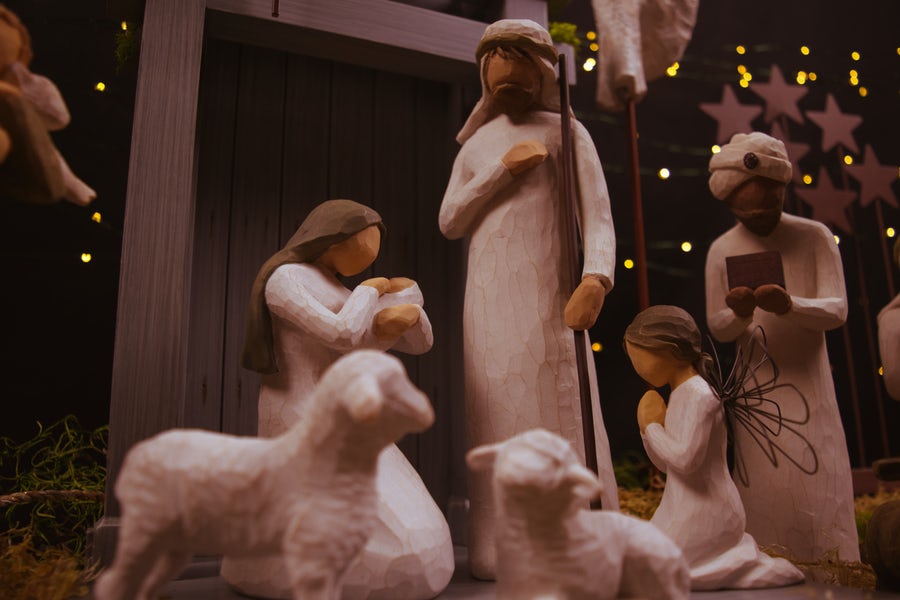
Make Room: This Christmas

We are approaching the most emotional time of year. It’s almost Christmas. And in the church, we have a season called Advent to help us get ready. Some people approach Christmas with great joy. Others find the season hard as they are saddened by the absence of people they love. Others find the season busy and hectic and feel as though they’ll never meet their own expectations of the way Christmas should go.

I started thinking about a recent metaphor I heard that is apt for talking about why we need to prepare (props to Rev. Brian Edmonds). Think about a car that is out of line. Have you driven one lately?

To the passenger watching the driver with her hands on the wheel it seems like nothing is wrong. The driver, however, can feel the pull throughout the ride and knows something is out of sorts. As soon as the driver take her hands off the wheel, the car begins to swerve off the road.

To me, that’s an apt description of the fallenness of the human heart. Sin can cause our hearts to swerve and run into other peoples’ lanes causing pain and hurt.

In Jeremiah 33:14, the prophet declares: “The time is coming, declares the Lord, when I will fulfill my gracious promise with the people of Israel and Judah.” Jeremiah wrote these words while the people of Israel were in exile. God had saved them from the Egyptians, walked with them for forty years in the wilderness and delivered them into a land flowing with milk and honey. When they arrived in this new land, they would eventually claim the credit and begin worshiping other gods.

God sent them into exile in Babylon where they were separated from their cherished land and Temple. There is punishment for sin. But God shows graciousness to them. Our God is one who fulfills his promises. God would send the people and us a savior in Jesus. 

Like the Israelites before us, we are still sinners. We have inherited original sin. Try as we may, we still worship our own gods, refuse to love our neighbors and allow our pride to isolate us from the God we love. The season of Advent is an opportunity for us realign our lives with God if we will but make room.

During this season, we do our best to make room for family, for friends, for shopping, for parties, for concerts. All good things. But I do think it’s tremendously important to use this time for its intended purpose which is to prepare our hearts for Christ. To do so, we have to make room. This season is about realigning ourselves and not trying to realign others. As Athanasius once said, ““You cannot put straight in others what is warped in yourself.”

The themes of Advent are hope, peace, joy and love. The ancient wisdom of the church reminds us that these themes have meaning across the ages. To begin this season, I sat down and wrote each of these words on a piece of paper.

I tried my best to listen to the yearnings of my own heart by asking, “Where is it that I’m lacking hope? Where do I feel despair? How might I use this season to devote myself more to God? What do I hope for my life?” I went through each word and jotted down my answers. I commend this practice to you as you prepare for this season. Listen to the yearnings of your heart. It’s trying to speak.

Where do you hope to find peace in your life? What’s out of sort? Is there joy? Is your heart full of love or anger? Write down what your heart is saying. Pray about the themes of hope, peace, joy and love during this season.

There is much darkness in our world. There is much division in our country. There are tangles and deep hurts in most of our families. That’s why Jesus came and why we prepare for his coming during Advent. In order to change the world, we begin with our own hearts.

I leave you with this prayer from St. Augustine.

The house of my soul is too small for you to enter: make it more spacious by your coming. It lies in ruins: rebuild it. Some things are to be found there which will offend your gaze; I confess this to be so and know it well. But who will clean my house? To whom but yourself can I cry, Cleanse me of my hidden sins, O Lord, and for those incurred through others pardon your servant.

May the Lord bless you with hope, peace, joy and love this season.

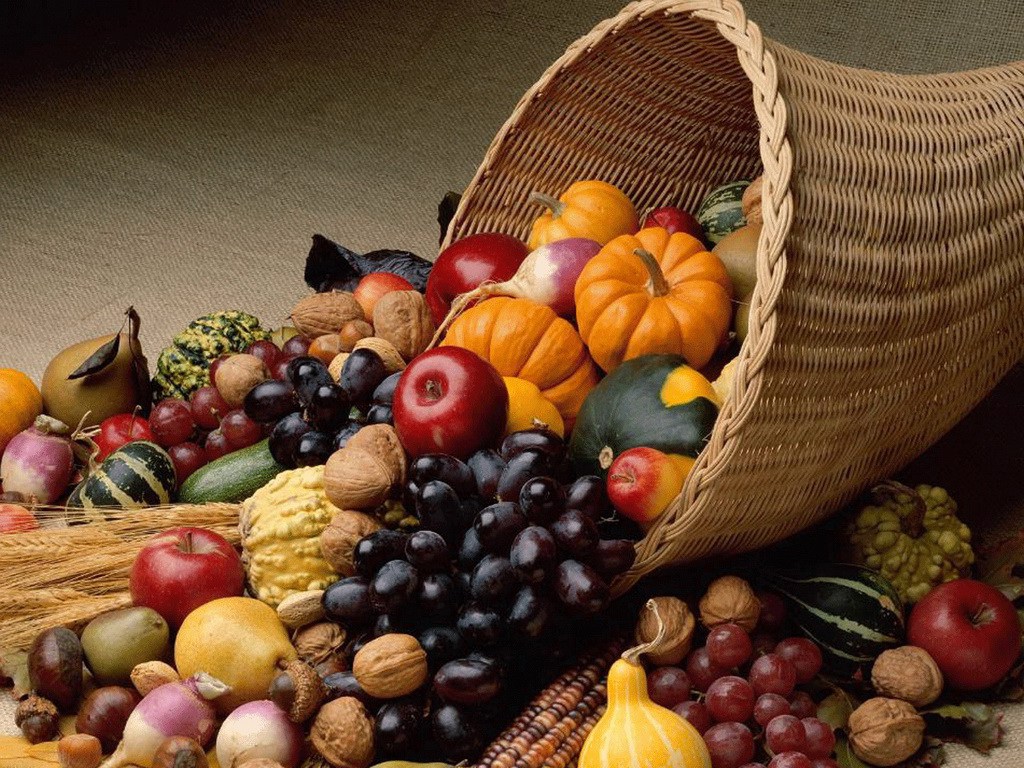
This Thanksgiving, make a habit out of gratitude.

The best way to rid yourself of bitterness is to replace it with gratitude. Gratitude takes practice. It requires habit formation. For better or worse, we all have habits.

Let’s start with the bad ones. This Sunday, we’ll look at chapter 10 of Hebrews. The pastor in Hebrews writes, “And every priest stands day after day at his service, offering again and again the same sacrifices that never take away sins” (Hebrews 10:11). Throughout the Old Testament, we learn of the many sacrifices priests would make for the atonement of sins. The book of Hebrews reminds us that Jesus has come as the perfect, once-and-for-all sacrifice. And yet, the priests continue sacrificing animals on the altar. Hebrews reminds us that those sacrifices do no good. The forgiveness of sins has taken place through Jesus on the cross.

Before we turn our noses at the priests of this day, we need to look inwardly. How many times do we find ourselves asking for forgiveness for the same sins over and again? Have you ever found it hard to let go of the past even after you have asked for forgiveness? You find it hard to move on. Praying the same prayer for the same sins is a bad habit that we need to break. Why? Jesus truly has forgiven us. As Hebrews 11:17 reminds us, “I will remember their sins and their lawless deeds no more. Where there is forgiveness of these, there is no longer any offering for sin.” Let’s move to the good habits.

In Hebrews 11:24, 25, this pastor exhorts his congregation, “Provoke one another to love and good needs, not neglecting to meet together, as is the habit of some, but encouraging one another.” Who knew that provoking each other was an act of faith? I am raising my children well. People in the church obviously had drifted away and needed to make meeting together a habit. They had become sluggish in their faith.

As we move into this seasons of Thanksgiving, I would encourage us all to make gratitude a habit. Instead of reliving our sins each time we pray, let us instead say thank you to God for mercy.

Lastly, I find today, there’s much bitterness in peoples’ heart. Our country is finishing an election season. There’s much hurt and skepticism. For Thanksgiving lunch, there’s sure to be lively conversation and anger spilling out thicker than the gravy. Here’s my one tip. When you get out of bed, put three pennies in your right pocket. Throughout the day, find three times to say thanks to God. Say thanks for a generous encounter with a friend, a beautiful sunset or a job well done by a co-worker. Each time you say thanks, switch one of the pennies to your left pocket. Keep it up until all the pennies are there. It’s a simple way to make gratitude a habit. It will help rid you of bitterness.

Don’t let your pastors hog all the ministry.

This coming Sunday, we’re looking at the analogy Paul makes about the church. He compares the community of faith to body parts working together. He writes,

12 For just as the body is one and has many members, and all the members of the body, though many, are one body, so it is with Christ. 13 For in the one Spirit we were all baptized into one body—Jews or Greeks, slaves or free—and we were all made to drink of one Spirit.

14 Indeed, the body does not consist of one member but of many. 15 If the foot would say, “Because I am not a hand, I do not belong to the body,” that would not make it any less a part of the body.

This analogy was not unique in Paul’s day. Other writers in the Roman world used this image to describe the social hierarchy. The elite were considered the heads and the lesser citizens who did all the hard labor were the hands and feet. That’s not what Paul means. In fact, Paul argues against this sort of understanding. Paul reminds this church in Corinth that one part is not more important than the other. All depend on the other.

In the life of the church, I have the privilege of witnessing how people use their gifts and play their unique role. We put together a stewardship team at Haygood (’tis the season) and it’s been fun watching how each person is uniquely equipped to carry out different tasks.  Our chairperson has done a terrific job of overseeing the specific projects within the campaign while allowing each person on the team to use their gifts. She did an especially good job with our home gatherings where she helped guide discussions on the hopes and dreams of our members. The reason? She leads focus groups for her work and knows how to get people to engage.

One of our team members was assigned the mailing because she’s been around for a while and knows who might be missing from our mailing list. She’s a good organizer. Another church person was assigned to format our brochure. Why? He formats brochures for a living. Another person was assigned to write and edit the brochure. Why? She’s an ad writer. There are some punchy, good descriptions in there. Another person was assigned to coordinate decorations. Why? She teaches interior design. She has put together displays of our church members’ hopes and dreams for 2019. They match the altar flowers each Sunday. There’s much more I could say. I think you get the picture.

Early in ministry in my first church, I may have tried to fill many of those parts on my own. I would scramble to pull together the mailing list, write a bland brochure and create displays that would make the Pinterest fails hall of fame. It wasn’t that I was bad at all of these jobs. I was often overwhelmed and wasn’t equipped. Our Bishop tells the laity often not to let the pastor hog all the ministry. She’s right.

This year, the quality of the work has gone up. My stress level has gone down. And there’s a buzz around the church because of the engagement level of our church members. Our final celebration is this Sunday and there’s good momentum as we round the corner. Yes, I’m one of the many members of our stewardship team making final calls to get a head count for Sunday’s luncheon (D.B.A barbecue and banana pudding). It’s great to be part of the Body of Christ where we each learn to play our part.


“There’s A Place for You”

Samuel L. Jackson is in our neighborhood this week. Seriously. He’s filming a movie called, The Banker, a street over from mine. It’s a quiet street called Sherwood with homes built in the 1930’s. I walk this street most mornings after the bus picks up my daughter for school. Usually, the most action on these walks is watching out for people backing out of their driveways for work. But not yesterday. I decided to stroll past the filming set in the early evening. It seemed as if everyone else in the neighborhood thought it would be a good time to take a stroll.

As I passed by the filming crew, suddenly I hear my name, “Will Zant!” For a fleeting moment I thought, “Well, finally someone realizes my talent.” But the voice wasn’t one of a director or talent recruiter. It was my neighbor and church member, Kevin.

Kevin lived a few doors down from the set and decided to bring out a chair and enjoy the fall air and the bustle of the film crew. He and his wife and I talked for a while. They have lived in the neighborhood for over 20 years. He updated me about the neighborhood and the history. There was something nice about an “experienced” Morningside neighbor calling my name. I felt like I belonged to this place.

As the new person to the community, you want to feel like you belong, like you have a place. I’m reminded of a quote from Fred Rogers giving advice to a journalist who had moved to a new community. He wrote to her, “Just as it takes a tree a long time to begin to grow again once it’s transplanted, so you can give your healthy roots time to find the nourishment of your new soil in your new community.”

On that walk, maybe the most meaningful thing to happen was not meeting Samuel L. Jackson, but walking away feeling like I was known and welcome. I imagine some of our biggest fears in this world is that there’s not a place for us. We won’t fit in. Our gifts won’t be needed. I won’t have anything to offer the larger community.

I’m thinking about our current sermon series at my church. Our theme is “There’s a Place for You.” My hunch is that such a message can speak to people longing to know there’s room for them.

This Sunday, we’re having our annual “All Saints” remembrance. We remember those saints who have gone before us in the community of faith. They are among the great cloud of witnesses who have professed their faith in Christ and have passed that faith down to future generations. We will remember 5 church members in particular who have died the past year. As a new pastor to this church, I’m reminded that I’m serving in a community of faith where I did not have the privilege of knowing the ones we will remember.

It’s a keen reminder to me that I’m inheriting the great work of people I have never known. The sanctuary where we worship, the room where children meet, the liveliness of our Wednesday night dinners: I have inherited all these gifts. The people have passed down to me a community where the name of Jesus is lifted up and where love abounds.

In a way, I’m quite envious of these saints. I’m preaching on a passage from Revelation that speaks of a new heaven and a new earth. The Lord declares,

Death will be no more;
mourning and crying and pain will be no more,
for the first things have passed away. (Rev. 21:4). 

They rest in place where suffering and death and crying are no more. We still have this mystic connection through our shared faith. They were like us.

I imagine them in the church at Haygood. I think about the many ways they nurtured their faith during times of hardships and joy. I often see pictures of Sunday school classes from the 1940’s. Pictures usually make people look more happy than they were. I imagine these groups prayed and suffered together. They prayed for each other in times of deep distress. They experienced WWII. They celebrated the birth of babies. They brought their dreams together and built a preschool. Although I can find no minutes of any sort of meeting, I’m sure there were squabbles over the need for one.

I’m thankful to feel a sense of connection to the past and to the present. I’m looking forward by God’s grace to finding my place to create the future.


You’re no daisy! Why giving God our best matters.

I never thought I’d enjoy gardening. I do. I’m a hobbyist at best. It all started a couple of years ago after I had hip replacement surgery. I  had hip issues for years and decided it was time to have it replaced. After the replacement, many church members referred to me as “their new hip pastor.” Even if it took a surgeon’s scalpel to earn that title, I’ll take it. My days of running up and down a basketball court were done. Planting flowers had become an escape.

When I scoped out our new church parsonage in the Morningside neighborhood in Atlanta, the first thing I noticed were four empty flower beds. Before we had put one piece of furniture in our house, I had plants in the ground. I had spent hours on my knees digging and mixing in the soil conditioner. I had debated what kind of designs to use for each bed. Maybe the obsession was a product of needing to care about something that was alive and healthy in a way that my old hip couldn’t be for years. Who knows?

My two children would help me water the flowers in the heat of June evenings. They’d turn the hose on me and point out the prisms of rainbows in the walls of water. We’d admire the flowers as they grew: daisies, black-eyed-susans, begonias. One Saturday, my mother was planning to stay at our house. We had prepared the bedroom downstairs for her. We included some of her favorite artwork and pictures of the family. As a parent with young children, you want to make a space where grandmothers like coming over!

After we had finished putting on fresh bedsheets for my mother, my three year old Bethany says to me, “I want to pick some flowers for Nana. For her room.” I said, “That’s a nice idea.” We walked outside and I showed her the lantana which had run wild.

“Let’s cut Nana some of the yellow flowers,” I said.

She said, “No. I want to cut her these” pointing to the daisies.

The white daisies were, to me, the most beautiful flowers in the garden and there were few. I didn’t want to cut them after putting in so much sweat to grow them.

“Oh, not those, sweetie. Let’s not cut those. Those are too pretty and we don’t have many of those growing.”

And Bethany looked at me with scissors in hand, “But dad, these are the prettiest ones.  I love Nana. She needs the best ones in her room.”

Nana loved the daises on her night stand.

Bethany reminded me that giving our best is the most appropriate way of expressing our gratitude. There are too many times to count when my mother has been there to change diapers, give baths, treat them to frozen yogurt while Blair and I took a breather. Lantana is pretty in its own way, but it’s no daisy. Or in the words of Val Kilmer in Tombstone, ‘You’re no daisy at all.’

Bethany knew my mom deserved our best.

This Sunday, we are discussing Deuteronomy 26. In this passage, we are learning about giving our best for God. Moses is providing instructions to the Israelites as they prepare to enter into the Promised Land. He writes:

When you have come into the land that the Lord your God is giving you as an inheritance to possess, and you possess it, and settle in it, you shall take some of the first of all the fruit of the ground, which you harvest from the land that the Lord you God is giving you, and you shall put it in a basket and go to the place that the Lord you God will choose as a dwelling for his name. 

For centuries, the Hebrew people had been enslaved in Egypt. They had no claim to the land or to the harvest of the land. What had been denied them so long was about to be given to them. After having suffered the oppression under the Egyptians, they were about to inherit a land flowing with milk and honey.

As a way of saying thanks to God, Moses instructs the people to give the best of their harvest back to God at their place of worship. They were to give the shiniest apples, the most plump grapes. God deserved their best and it became a symbol to the people of God’s faithfulness to them in the past. This act of offering their first fruits was a renunciation of any ownership of their hopeful circumstances. This land flowing with milk and honey was an act of their gracious God.

In fact, when the people were to present their first fruits to the Lord they also recited these words to the priests with their basket of fruit in hand:

“When the Egyptians treated us harshly and afflicted us, by imposing labor on us, we cried to the Lord, the God of our ancestors; the Lord heard our voice and saw our affliction, our toil, and our oppression” (Deuteronomy 26:6,7). 

Notice this declaration was specific and rooted in their past. The reason they gave their best was because God had given God’s best in their deliverance. Giving their best was a reminder of a God who continued to be gracious to them.

The Biblical practice of giving the first fruits has relevance today. What would happen if we gave to God by remembering a specific time God had delivered us? What if every time we made a financial offering to God, we did so remembering when God helped us when we didn’t feel we deserved it?

That’s the reason we give. Jesus was the once-and-for-all sacrifice. God gave us God’s best in giving his only Son Jesus.

When I struggle to think about giving money to God because I think this money is the fruit of my hard work, I need to remember my daughter’s words about giving our best. God has given us God’s best. How might we give our best for God?