You can’t outrun God

I recall some of my earliest memories of the Book of Jonah. They were from my illustrated Bible for children. My mother would read these stories to me at night as a preschooler. I’ve tried to emulate her example with my own children. The story of Jonah was one of my favorites because it involved ships, seas and fish. Our version had Jonah being swallowed by a whale. Into my adult life, people have argued that it wasn’t a whale but a big fish. However you read the text, an underwater creature swallowed a grown man and spit him out onto the shore. Whether it was a fish or a whale seems to be splitting scales.

I remember the picture of Jonah inside the whale. He was holding an oil lantern down inside the whale’s stomach, sunlight shining through the blow hole, resting peacefully as we waited to be regurgitated out on shore.

I love these memories of this story. But there comes a time where we must move from the surface introductions of God’s story and explore the deep. In some ways, Jonah is like a Pixar story. It can capture the imagination of children, while grabbing the attention of the adults. That’s what I hope we can do with Jonah. We rightly do not mention to children that the Ninevites in the story were Assyrians who set fire to the holy places in Israel, poked out the eyes of Jewish leaders and sent families with their children packing to live in exile in a foreign land. And yet that kind of information is important if we are to grow.

But before we explore the depths of the story itself, we want to address what’s on most adult minds about Jonah. Was Jonah really swallowed by a fish?

Could it have happened? Well absolutely. If God raised Jesus Christ from the dead, God can have a man like Jonah swallowed by a fish and spit out on shore. Could this story be fictional? Well, yes and there’s good Biblical evidence. Throughout the scriptures, we find evidence of fictional stories. Jesus used them all the time. We call them parables. The story of the good Samaritan. The story of the Prodigal Son. These are both fictional stories from Jesus, but they are true stories in their message.

Recently, I read an article about a person’s thoughts about the Biblical character of Job. People often have questions about whether Job, who suffered devastating loss to his family and livestock, was a historical person.  Could a man truly endure as much suffering as Job? This author, a Methodist Pastor, wrote the early 1900’s.

 It makes little difference if there was or was not a real human life that was actually surrounded by all the historic details of the Book of Job, so long as I know that at this far distant period some soul struggles, as mine has done, with the mystery of suffering, and finally triumphed through a faith that brought to him a fresh and soul-satisfying vision of God.  (Rev. Dr. Forrest Prettyman)

I would echo these sentiments about Jonah. Was there a fish that swallowed Jonah? I can’t say for sure. But what matters to me is that there was a great soul who was struggling with God’s call upon his life. He was inspired by God to write down this experience of running from the call.

As we study Jonah, I don’t want us to get too focused on whether this happened exactly the way this story says. I would rather us focus on the struggle of what it’s like to try and follow a calling that is really hard like Jonah did. Because at some point, we’ve all had Jonah moments. We have felt a pull, a tug upon our lives from God to carry out God’s plan. This call goes against our own desires. Like Jonah, we hope this call would go away if we ignored it long enough but it doesn’t.

The book begins with the introduction to Jonah of Ammittai. Ammittai means son of faithfulness, which is quite ironic. Jonah is anything but faithful. Then, the word of God interrupts Jonah’s life, as it often does. The Lord tells Jonah to get up and go to Nineveh because the great evil of Nineveh had come to the Lord. As mentioned earlier, Nineveh was the home of Assyrians. The Assyrians were enemies of the Jews. In the 700’s BC, they tore through the Northern Kingdom of Israel. They devastated the Jews. Jonah would have had a deep seated hatred of the city of Nineveh. Notice that you don’t see too many churches named, “Nineveh.” In fact, I thought there weren’t any until I did a Google search. It turns out there are 2 “Nineveh United Methodist Churches.” Can you imagine as a pastor being told by your Bishop, ‘Hey, Will, do I have a great appointment for you? I’m sending you to Nineveh?'”

In other call stories like Isaiah we have these faithful moments when the Lord calls. Isaiah responds to the voice of God, “Here I am, send me.” And young Samuel in the house of Eli responds to the Lord, “Speak Lord for your servant is listening.” Not so with Jonah. Jonah gets the call and sets out to flee to Tarshish from the presence of the Lord. Jonah ran in the complete opposite direction. He thought by running, he could flee from the presence of the Lord. And later in this story, he tries another tactic. He boards a ship and tries to sleep away the call only to wake up to the devastating consequences of his avoidance. The ship is about to sink. 

If you’re like me, there are times where you experience troubling situations where you just want to go to sleep and hope the problem will take care of itself when you wake up. That’s not the case with God’s call upon our life. God will not leave us alone. God will keep troubling us.

I found an interesting commentary on the book of Jonah from the great novel, Moby Dick from Herman Melville. To be transparent, I’ve never read Moby Dick. I wish I could impress you and say I had, but I did come across this excerpt from the fictional preacher in this novel. He preached,

And if we obey God, we must disobey ourselves; and it is in this disobeying ourselves, wherein the hardness of obeying consists.

To obey God often means we must disobey ourselves. That’s why it’s so hard to follow a call from the Lord. Oftentimes, it means disobeying our wills and what we want for our lives. Even Jesus, our Lord and Savior, reveals a moment of struggle. His Father in heaven called him to die for the sins of the world. The night before he is to die he prays in the Garden of Gethsemane. He prays, “Lord, if you are able, take this cup from me. But Lord, not my will, but thine be done.” He struggled with his own human will and the Lord’s will.

Have you found yourself running from a call from the Lord? Is there a calling for some purpose that you have actively avoided? Maybe it’s not to preach a word to the Ninevites. Maybe it’s to serve as a reading buddy at the local elementary school. Maybe it’s to get involved in a prison ministry. Or speak out against the injustices you see. But you know what’s amazing about the Book of Jonah. Jonah’s calling made a difference when he finally carried it out. The people of Nineveh in a shocking way repent and change their ways. Carrying out your call will help you live into God’s bigger picture for the world. How might today you obey God by disobeying yourself?

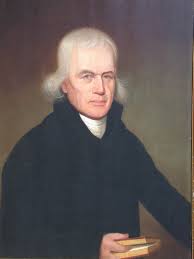
As we celebrate our nation’s independence this week, I think about an American saint who, like Jonah, also felt a call to bring the word of the Lord to a new land. Unlike Jonah, he willingly accepted. He is often overlooked in the building up of our great country. He didn’t help Thomas Jefferson pen the Declaration of Independence. Nor did he assist Georgie Washington in leading an army into battle. He did help establish the religious foundations of our country. His name was Francis Asbury.

Asbury was a minister in England ten years before the American Revolution. John Wesley, the founder of the Methodist movement, was looking to send English ministers to the American colonies to build up the American church. Few of the ministers raised their hands to volunteer. At age 26, Asbury decided to answer the call and raised his hand to set sail for America. Most British ministers didn’t see a lot of potential in Asbury in England. He was expendable. If it worked for him in America, wonderful. If not, no big loss.
Unknown

When he arrived in America, he developed a common touch with the colonist. They respected and admired him as he traveled across the frontier. But when the revolution broke out, most colonist did not trust Methodist ministers because of their allegiances to the English King. For fear of their lives, many of the ministers returned to England, which left a shortage of ministers to oversee the sacraments and lead the churches. (Consequently, congregations were forced to develop and nurture their ministries in the absence of clergy. Strong lay leadership in today’s church is part of the legacy of the short supply of ministers of the early American church. Consider too most Methodist churches today serve Holy Communion once a month. That rhythm dates back to the early American church when churches only had a minister once every 4-6 weeks to preside over the sacrament).

But Asbury refused to leave. He loved America. He was committed to God’s work here. He had to go in hiding in Delaware during the revolution. When the war was over, there were hardly any ministers to lead the churches. Asbury proved his trust to the people.

He rode across the frontier on horseback, preaching, developing relationships with local leaders, offering the sacraments. In a time of great resistance, he spoke out against the evils of slavery. President George Washington even invited Asbury to Mt. Vernon to hear out Asbury’s moral reasoning for eliminating slavery. Asbury must have been persuasive. In his will, Washington freed his slaves, one of the only founding fathers to do so, quite possibly because of Asbury’s witness and influence. Asbury rode tens of thousands of miles across America, often suffering from illness. He never married and never owned much more than he could carry on horseback. His one mission was to spread the news of Jesus Christ to this new country.

By the time he died one in every Methodism was the largest Protestant denomination. In his day and time, he was often considered the most trusted man in America.

His legacy is not in books and sermons, but in his tireless efforts. He helped shape thousands of preachers one conversation at a time, and in the tens of thousands of ordinary believers who saw him up close. He was the people’s saint, an ordinary person who God chose to do extraordinary things.

I’m thankful to live in a nation that gives me the freedom live out our calling. We’re not a perfect nation by any means, but we are free one. With this freedom, I want to follow the example of people like Francis Asbury. He worked tirelessly for the gospel, often preaching in snake boots, sweating from the outdoor revivals, after traveling all day on horseback.

Asbury teaches us that our callings are not always easy and require lots of hard work. But that’s the American way. That’s why Jonah struggled so much with his calling. It was hard to think about preaching to people who had hurt him and his fellow Israelites. But when he carried out God’s call, extraordinary things happen. Extraordinary things can happen you when you accept your calling. What calling have you been running from? You can’t outrun God. The call won’t go away. What might happen if you accept?
Stuck in the Marble

On our recent trip, Blair and I spent a few days in Florence, Italy. I had seen pictures of the famous church, “TheDuomo” (more formally known as the Cattedrale di Santa Maria del Fiore). I knew I would be impressed. But I wasn’t ready for it. When I approached this magnificent building, I gasped. I was dumbstruck by its beauty and its height. It was built in the 1400’s before heavy construction equipment. It was the largest and tallest church in the world at the time. It took over 100 years to build. Block by block God’s people stacked this church into being. They understood that height appealed to our understandings of the grandeur of God. What is it about height? 

j%yOepMvSXSlSZRmpOaMwA
“The Duomo” of Florence. The dome in the back is simply amazing to see. We were equally awestruck by the different colors of marble and their designs throughout the whole structure.

We marvel at our own ability to build something high. Often, we associate height with the divine. We think of passages from the Bible like Jacob’s ladder from Genesis 28 on which angels ascend and descend from the heavens. And so to build a structure high has a way of making us feel like we can ascend to the heights of God’s domain. But the Bible is not always keen on tall buildings.
In Genesis 11, there’s a curious story about God’s people building a tower, often referred to as the tower of Babel. God’s people said, “Come, let us build ourselves a city, and a tower with its top in the heavens, and let us make a name for ourselves. Otherwise we shall be scattered abroad upon the face of the whole earth” (Genesis 11:4). The people want a structure with its top in the heavens. 

Why? They had two motivations. The first was pride. They wanted to make a name for themselves. What better way to make a name for yourself than to have a tall building to show your importance? Notice, they didn’t say, “Let’s build a building to glorify God and God can make a name for us.” They want the credit. But secondly, they don’t want to be scattered. They reason that if they make a name in this new city, they can bunker down and settle in without having to move. They can mingle with people who think, eat and act like them. But God had different plans. God doesn’t want the people to settle. God wants them to scatter them across the earth. 

God desired that his covenant for creation spread to all people. God wanted them to encounter different nations and cultures of people, new races. God breaks up their establishment. At this time, they had one language. God decides to confuse their languages. They could no longer understand each other. They called the place “Babel” because of the confusion of language. In doing so, God scattered the people from their homogenous environment. 

Scattering the people wasn’t God’s way of punishing them. It was God’s way of fulfilling God’s will. God was trying to teach them that different places and different kinds of people weren’t bad. They needed to be amongst other nations to witness to God’s covenant, joy, freedom and care. Scattering is not a bad thing. Diversity is to be celebrated in God’s creation. 

God calls us to build our lives outward instead of upward. Our faith is outward, not upward. When we try to build our lives upward, the focus tends to be on us and trying to build a name for ourselves. We become a homogenous group of people who hang out with people who think, act and look like us. That’s not God’s design for the world. God has designed us to scatter, to be among people who are different than us. God needs us to move outside the echo chambers of our life where people simply agree with us. 

Just the other day I was with my family. My sister was asking me how I like living in Atlanta. I said, “I love it. In fact, on most weeks, I don’t travel more than 2 miles from our home. Everything’s right here. Church, school, parks. It’s hard to imagine going outside the perimeter to the burbs.” 

My sister laughed, “Will, you’re such a snob! How terrible it would be if you had to come all the way to Madison.” I didn’t mean it like she took it. But that has become the joke in our family. I sort of get it. We live in a world full of diversity. God celebrates the diversity of creation. There’s the diversity of language, food and culture. To live a life outward means to live in community with people who are different than us and to appreciate them. And crazy as it sounds, we learn that these differences enrich our lives. 

As I mentioned earlier, our family traveled to Italy. It was a chance to get out and see the world. My mother is good about making family trips a priority. In fact, she makes sure we put dates on the calendar a year in advance so we won’t miss it. 

Blair and I decided we would venture off by ourselves for two days in Florence without the rest of the family. They suffered by themselves in the Tuscan city of Sienna. Without the kids, we took our time. If we learned anything from the Italian culture it was to slow down. Restaurants didn’t open for dinner until 8p.m. We strolled through the piazzas at dusk and ate rich Italian food at cafes with outdoor seatings under large umbrellas with the pigeons around our feet and the bells of churches ringing. I can understand why God asks us to celebrate the diversity of culture. 

xpYG9SxaiTo5FK0VUWA
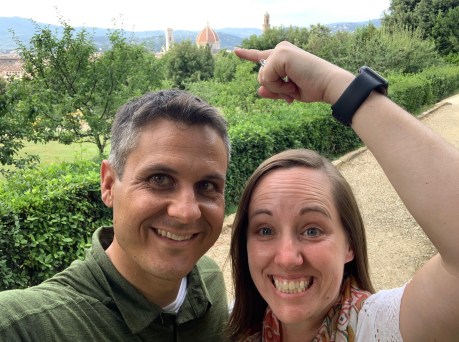
Blair and I in the Boboli gardens overlooking Florence. Blair is pointing to the Florence “Duomo”.

Blair and I love the arts. There was plenty of it in Florence. Inside one Cathedral, I told Blair, “I don’t understand why the Catholic Church sculpted so many bust of their priests and painted so much art about their popes.” She said, “Will, they didn’t have photography. This was their way of remembering their leaders. Think about the churches you have served. They all have pictures of their pastors somewhere in the church.” It gave me a little more perspective and understanding about the Catholic Church. We visited the Uffizzi museum with a guided tour and then headed to the Acdadamia to see Michaelangelo’s David. 

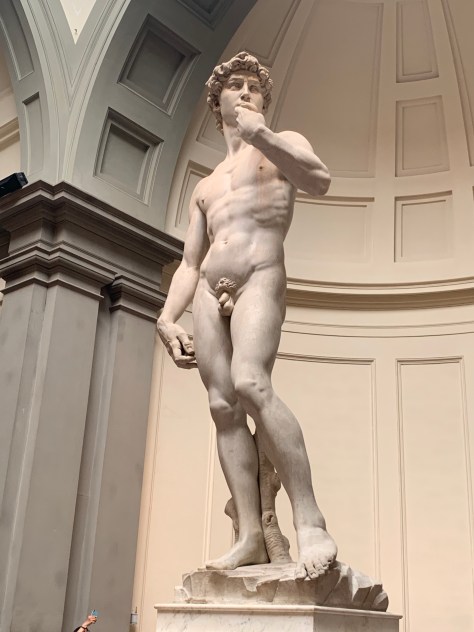
As our group headed into the main hall, I turned my head right and there he was. He was perfect and made you want to start working out and cut out the gelato. People are right. It’s a religious experience. I’m still amazed that an artist could have such a perfect idea in their head and could make it come to life by chipping away at stone.  

Our group of ten was standing next to the David in awe with our earphones listening to every word of our tour guide. After she had finished with an excellent historical perspective about the David, she asked, “Are there any questions?” This one man, an American, says, “What was wrong with the air conditioning in the other museum? They need to get their act together.” The moment was so pregnant with beauty and awe. How could anyone ask a question like that?

dH0Z4oduSriyU16UHcNnxg
Michaengelo captured David, the future king of Israel, just before he struck down Goliath with a sling and stones. Most other sculptures of David were set after he had defeated Goliath. Notice how muscular David is and his focused stare towards his opponent.

Equally as inspiring were these unfinished works of Michealangelo just before you arrived at the statue of David. They were pieces that Popes and Cardinals had commissioned him to do. As soon as he would start on them, they would change their minds and send him to a different project. It was a relief to know that bosses priorities changed back then too. 

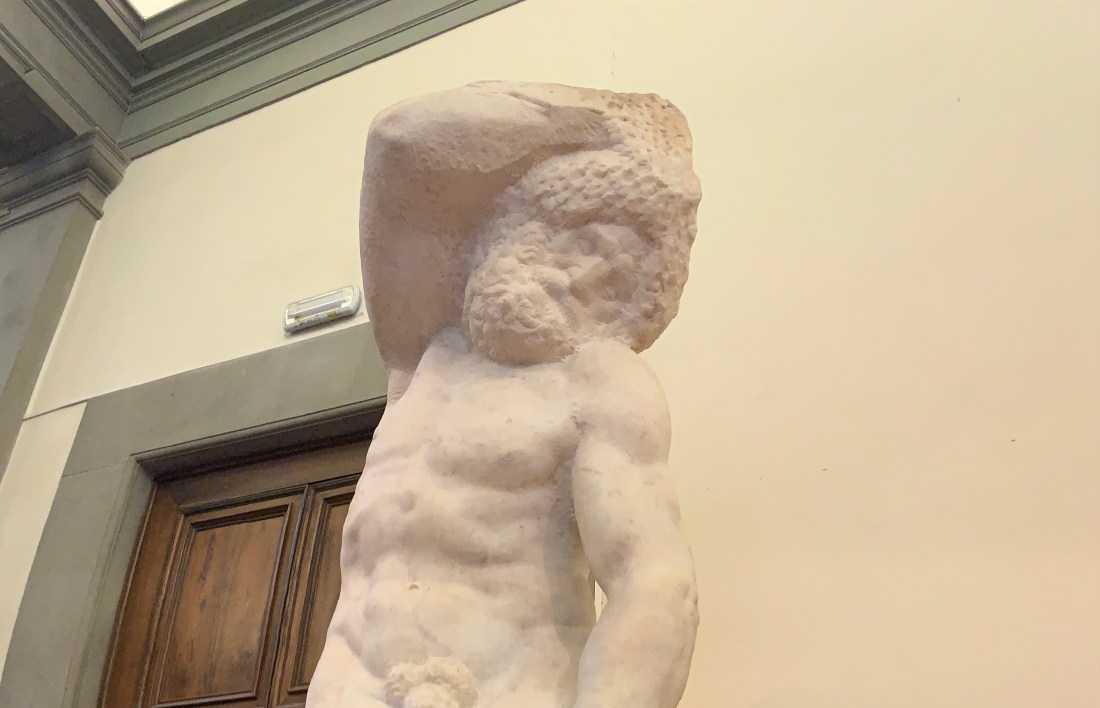
The images in the stone felt trapped. One was of a slave pushing his arm in the air. You could see the dots from where the artist had been chiseling away at the stone, but left it undone. I was inspired by the creative process, even considering my own acts of creation in sermons I had started but never finished. The figures were stuck, unable to escape from the marble. Our guide then told us about Michelangelo’s unique gift to see the image in the marble. Michaelangelo once said, “Every block of stone has a statue inside it and it is the task of the sculptor to discover it. I saw the angel in the marble and carved until I set him free.”

As I looked at the statues, enslaved in the marble, I thought of our human condition. We are a people stuck inside the marble begging God to set us free. We are a people struggling with our own unique circumstances of marriage, raising kids, caring for aging parents. We are a people of different countries struggling to understand each other and live peaceably. We are a people of different races struggling over our hostile histories. We long to be set free.

wajA7LfETY69Ul3OcyaPYw
Here is Michaelangelo’s unfinished, “Bearded Slave” in the Accademia in Florence.

Here’s the good news for us. Jesus Christ can set us free. Jesus Christ has come in grace to forgive sins. Jesus has come to forgive us of pride that cares more about ourselves than what God would have us be. There are people of different backgrounds. They are not  in Italy. They are right around the corner. They are people who speak Spanish. People with no documentation. People with big homes. People with no homes. People who can draw, sing and dance. People who play baseball. People who like to fish. People who like to rap. The diversity of this world is to be celebrated and to enhance our awareness of God’s goodness. How might we live our life outward instead of upward? 


Alpine Escape

The Zant clan returned from our trip to Switzerland and Italy. My mother helped make this happen. Blair and I have been married more than 10 years so this felt like a second honeymoon. We left the kids with her parents. (Thanks Joann and Michael).

Our first stop was Luzern, Switzerland. It’s a beautiful place. There’s a crystal clear river running through the heart of this Alpine city. The water was running fast from the Alps runoff. Our crew took a train to Engelberg to the base of tall mountains just 20 miles north of Luzern. We took a gondola ride up to Mount Titlis, where we gasped at the height and vastness of the peaks.

IMG_1099
We are on the gondola ascending to Mt. Titlis while looking back at the peak of Mt. Trusbee and its glacial lake. 

On top of the mountain, we snapped pictures, sure to get the snow capped mountains to frame our smiles. Blair has made our couple’s shot her Facebook profile.B081D967-0FF6-42B7-8847-758BF21948CA

But after the pics, we took in this sight. It’s perhaps the grandest of all of nature I have witnessed. We were so high the oxygen levels dipped. I found myself laboring for air and felt a slight bit dizzy at first, which added to the power of the Alps and their mystique.

Blair and I stole away for some snow tubing at 10,000 feet. Beats the heck out of North Carolina. We explored an underground glacier before heading down to Trusbee peak which was a mere 7,000 feet high. We walked around the glacial lake. Blair performed her rendition of the “Sound of Music” and I recorded it on the I-phone. She wanted me to record it for us as a self-indulgent moment of fancy. I decided it need to be the family entertainment before dinner. I learned my lesson.

IMG_1239
(Our joke was that the hills are alive with the noise of Zants). Not so with Blair. She can sing!

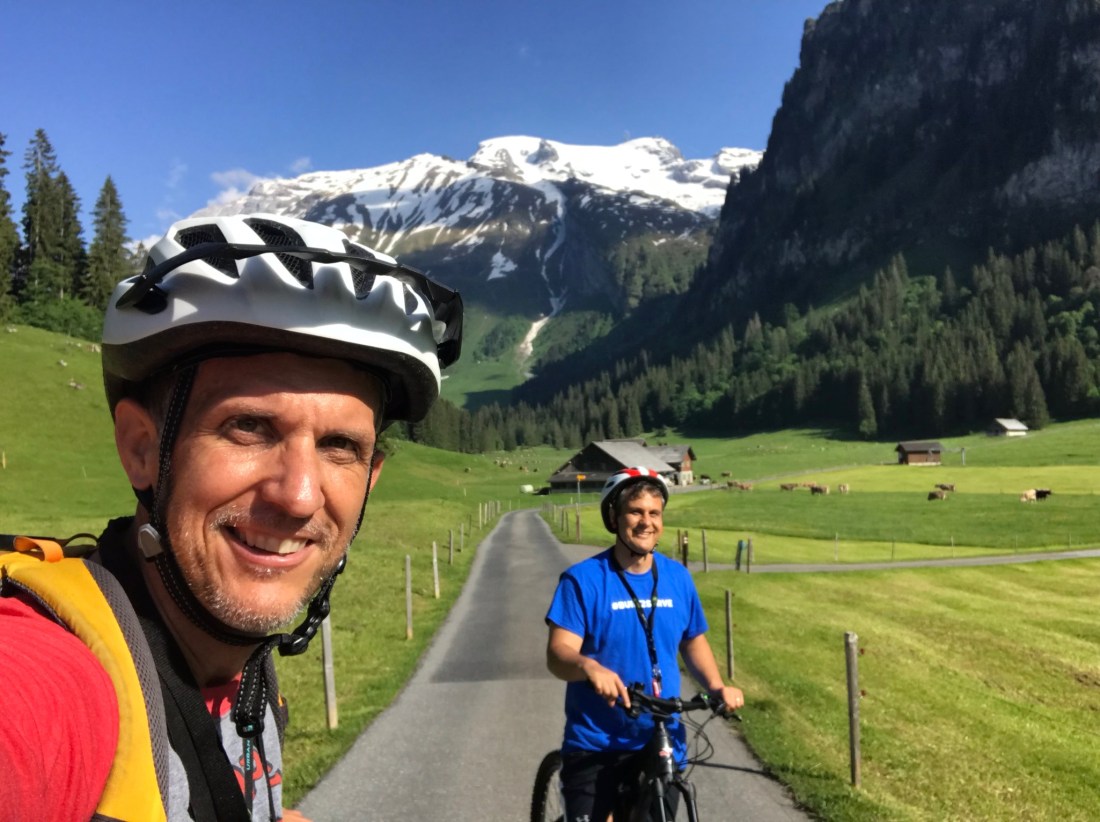
Also, my brother Dan and I took a train ride up to Engelberg on Monday, the day we arrived in Luzern. We rented bikes and caught the train north. Once in Engelberg we headed back on the 22 mile track to Luzern. It was a mix of gravel road, pavement and bike lanes. Dan loves the crazy bike trails that curve along cliffs and rocky terrain and there were plenty of them. I made it clear we were not doing that. Balancing a bike, anticipating turns and trying not to slide off a 1,000 foot cliff is Dan’s idea of heaven. For me it’s the other place. It requires too much work. So we stuck to paved roads mostly and I found my rest.

IMG_0003We rode with pedal-assisted bikes which means we were moving at a good clip. Cowbells rang in the valleys, the moderate air a relief from the humidity in Georgia. The mountains that towered on both sides gave a feeling of safety, while homes dotting the green hills made you think you could live there until you thought about the cold winters. I love riding because my mind can escape, especially on the lonely bike lanes wandering through these villages. I didn’t have to concentrate on twist and turns but could get wrapped up in the new scenery awaiting after each mountain and the approach of a new village.



In the midst of the work routine, my brain always seems to churn, even when I’m not at work. It’s like your brain is pedaling a bike to the point of muscle lock-down, but your brain keeps trying to pedal. But the fresh air, the new forms and legs pedaling allowed my mind to be free to wander off its tiresome treadmill and be restored so that the work I love can be refreshed.

With the feel of real sweat down my shoulders, the glacial river running swiftly beside us, I kept pushing towards Luzern and while moving at 27 km/hr felt my heart still and at peace in the silence of God.

In this beautiful place, I found the healing balm of nature. I think of the words of the psalmist in Psalm 8, “O Lord, our Sovereign, how majestic is your name in all the earth!” 

For those who read this, I pray you find time for your heart’s replenishment as you are lifted into the presence of the divine through God’s handiwork.

“Butt in seat” theology.

I started this blog about 9 months ago. I have tried to start a blog before and I usually write four or five entries and then fade into the abyss. This time, I told myself I would write one entry per week. That’s it. Not every post is that great. When people tell me, “I read your blog,” my typical response is, “Oh, you’re the one.” The stats sometimes suggests I’m not far off.

There are some days, I don’t feel like writing at all. I have had to make myself do it. I have heard it said that the key to becoming a better writer is the mantra, “butt in the seat.” You don’t get better at writing if you don’t write. Some days you just to have to solider up and write even when you don’t have the inspiration. The myth is that you have to wait for the inspiration. I find the opposite is true. Inspiration comes as you begin to write.

I have wanted this blog to be about helping people live their Christian faith more devotedly and to share honest struggles I have as a pastor and follower of Jesus. Here’s where the “butt in seat” theology comes in hand. If we want to grow in our Christian faith, we need to take the same attitude as writers. We need to develop practices we do each day and week that form our Christian character. Some days these practices will not be the most exciting task on our to-do list.

I’m a Methodist. True to our name, we believe there’s a method to becoming a devoted follower of Jesus. We call these methods the means of grace. They are practices that help us stay in love with God. These practices include daily prayer, partaking in Holy Communion, serving the poor, reading our scriptures, getting involved in a small group ministry. It’s not just one day of prayer that will change our hearts. It’s our devotion to a method of praying over time that changes and forms us. The same is true for the other practices.

There are days that I struggle to pray as long and as focused as I would like. Life happens. The kids want to go to the pool. On those days, where I haven’t put my knees on the ground and prayed, I have felt off kilter. I lack grounding. I long for God and that takes a method to form our relationship with Christ.

There is the old story from the methodist annals about John Wesley in 1738. At this time in his life, he was a minister in the Anglican Church in England. He was struggling because he didn’t have an assurance of his faith. He was burned out. He asked himself, “how can you preach faith to others if you don’t have faith yourself?” He asked a Moravian pastor named Peter Bohler if he should stop preaching all together. Bohler responded to Wesley, “By no means. Preach faith till you have it; and then, because you have it, you will preach faith.”

Wesley would do just that. He would go to the prisons and proclaim the word of God. Through this practice, the Holy Spirit stirred in his heart in mighty ways. Why? He made preaching the gospel his duty and faithful practice. It was his method. Just a few months later, he had a conversion experience where he felt the assurance of his salvation through Christ.

For our faith in Christ to grow, we need a method. What’s yours?

I can’t keep quiet.

This Sunday is Pentecost. It’s often called the birthday of the church. I have served several churches where we brought out a cake and sang happy birthday to the church. Which is good. But singing the Happy Birthday song in unison wouldn’t sound much like that first Pentecost. The first Pentecost was a raucous, chaotic, unsettling kind of event. The imagery in this week’s passage from Acts 2 evokes images of tornadoes, fire and drunkards.

To set the stage, it’s fifty days after Easter. It was originally a Jewish holiday remembering the giving of the Jewish Law. In Luke’s gospel, it’s not about the giving of the law, but the coming of the Holy Spirit. Jesus had ascended ten days earlier. And before left, he told his disciples to wait until they were clothed with power from on high. Then the power came in the form of the Holy Spirit. Luke describes it this way:

And suddenly from heaven there came a sound like the rush of a violent wind, and it filled the entire house where they were sitting.

The wind was violent, which is a bit surprising at first. A few weeks ago, I was in Kansas City. True to form, we had a tornado warning. We could hear the howling of wind. Later, we’d see the devastation of homes on television. In John’s depiction of the giving of the Holy Spirit, we find a much calmer spirit. It’s not like wind, but breath. Jesus breathed upon the disciples and gave them confidence and peace during an unsettling time (John 20:22). But in both cases the Holy Spirit commissioned them for the work of God. In John’s gospel, Jesus gave them the confidence through the Spirit to forgive sins. In Acts, the gift was different. It was the gift of speech! Maybe that’s where the violence comes in. I don’t like to think of speech as violent, but speech, like violence, has a way of creating chaos and confusion. A few moments on Twitter will verify the violence and chaos that speech can enact. When the disciples began to speak a bit of chaos and confusion ensued.

If we look at the creation story, we see how language, chaos and creation work together. A wind swept over a chaotic, formless void. God spoke and life came into being. The act of speech gave birth to life. Pentecost is like a second creation story. Wind swept through this house and speech poured forth from the disciples. A church was born.

The Holy Spirit catches fire and lands on their tongues. They won’t be quiet. Our God is an amazingly strategic God in fulfilling his plans to reach the nations. That’s the purpose of Acts to show how the Holy Spirit to spread the gospel through the ends of the earth. But instead of the disciples be sent to the ends of the earth initially, God uses Pentecost as a special occasion. Jews from all parts of the world were there to celebrate Pentecost. They would soon be returning to their homelands. And so God lights the tongues of the disciples on fire and they began to proclaim the message of salvation to those gathered. It’s a clever way to get the word scattered quickly. 

The first gift to the church is the gift of speech. It’s the gift of proclamation. It’s not soft proclamation. It’s bold, prophetic speech. Does it incite a little chaos? Yes. The religious leaders were whipped into a frenzy over these Christians who kept talking about this Jesus they thought they put to death. But that same speech also birthed the church. These were the same disciples who hid after Jesus was crucified. Now that the Holy Spirit has come they are emboldened. It’s a noisy affair. Again, language can be unsettling. At first, the people accuse the disciples of being drunk. They think it’s slurred speech, liquid courage. But this power is not of alcohol, but of the Holy Spirit.

A few weeks ago, I was speaking with some of our children. I asked them if they have any questions about worship. They said, “Why do we say the same words when we say the Apostles’ Creed? We say it every week. Could we say something new?” (I love the honesty of children). I explained each part of the creed. To their credit, they recited back the creed to me, which means they’re picking up the foundational beliefs of the church. But I did understand their sentiment.

A writer in The Christian Century told about a congregation who had formatted all its services on computer. When a funeral services was to be held, they ran the same liturgy they had used for the last funeral, substituting only the name of the newly deceased (Edna) where the name of the previous woman (Mary) had been. On one occasion, everything proceeded smoothly until they came to the recitation of the Apostles’ Creed, during which the people changed together their belief in Jesus, who was conceived by the Holy Spirit, born of the Virgin Edna…”

At times, we can get on cruise control in our faith. We need an intrusive new word from God to shake us up!

John Wesley, the founder of the Methodist movement cautioned the people called Methodist when said,

‘I am not afraid that the people called Methodists should ever cease to exist either in Europe or America. But I am afraid lest they should only exist as a dead sect, having the form of religion without the power. And this undoubtedly will be the case unless they hold fast both the doctrine, spirit, and discipline with which they first set out.’ (Thoughts Upon Methodism 1786). 

The most important gift from the Spirit for the spreading of the gospel is one of prophetic, bold, evangelical speech. The spirit finds release through speaking. The apostles speak when they’re told to be quiet. That’s the power of speech. It can get you arrested.

I remember a kid attending a summer camp in the mountains. As a 10 year old camper, I remember the worst part about the whole day. It happened after lunch. They had us return to our cabins and lay down in our beds. Our cabin leader would utter those awful words. ‘It’s rest hour. No talking.” I despised rest hour. I pretended to write letters to my parents. But after a while, my fellow campers and I couldn’t hold our tongues. We’d whisper jokes and burst out in laughter.  The leader would holler, “Hush. No talking.” Do you think it worked? We weren’t about to nap and ten year olds can’t keep quiet for an hour. Were their threats from our leader? Of course. “If one more person talks, I’m taking you all out onto the athletic field and we’re running the rest of rest hour.” Do you think it worked? We chirped like birds. We knew how to irritate our captor, I mean leader. Persistent speech has a way of disrupting and irritating the people in charge. It’s a way to birth something new.

In Acts 4, Peter and John get themselves arrested. Why? They can’t keep quiet about Jesus. They keep speaking up even when the authorities tried to silence them. When ordered not to speak, Peter and John answered them, “Whether it is right in God’s sight to listen to you rather than to God, you must judge; 20 for we cannot keep from speaking about what we have seen and heard.” The disciples couldn’t keep quiet. Nor should we. 

What is the most courageous thing you’ve ever said? I had a friend who used to say ad nauseam, “Speak up even if your voice shakes.” As terrifying as it can be, speaking the truth can liberate us. Whether it’s women speaking up in the “Me Too” movement or a child telling their parent about being bullied at school, courageous speech can change the world.

As Methodist, we believe in a social and evangelical gospel. We can speak the truth about the social concerns of our day and we can boldly proclaim the good news of Jesus to those who have not accepted him into their life. That’s the power of the Holy Spirit.

For any one reading this right now, I’m telling you the truth. Jesus Christ is alive. By the power of the Holy Spirit, Jesus has come to save you. God is capable of doing more than just a little redecorating of your life. This God has come to renovate you. By the power of the Holy Spirit and the name of Jesus Christ you are forgiven of your sins. I can’t keep quiet about this Jesus.

And if this word is of God it will be a disruptive word to you at first. It may mean you have to take serious look at putting down the bottle or take a hard look at how you treat your spouse. It may mean you have to acknowledge you can’t fix yourself but are in need of the grace of God. Jesus is alive and can give you the life that is the real life. I can’t keep quiet about him! He is my savior and my God. He can be yours too.


The Summer Games

This Sunday, we’re beginning a new sermon series called, The Summer Games. I need to give some props to my colleague Jeremy Lawson. This was his idea and he’s done a similar sermon series.  I liked it because there was a spirit of play to it. Summer seems to be a good season for play. The church can use more play, even (if not especially) in our theology and study of the Bible.

I have noticed that my kids laugh all the time. There’s a part of me that wishes that I still laughed like they do.  Life gets suffocatingly serious as you get older. Maybe that’s why Jesus pointed to children as the example of what the Christian faith looked like: innocent, joy, laughter. My hope is that this series will offer a touch of play as we learn how to deepen our relationship with Christ.

My oldest daughter loves to play games. I try to teach her the games from my childhood. Chutes and Ladders. Memory. Checkers. Go Fish. Our favorite game to play together is UNO. A lot of people ask me whether I let her win. No participation trophies in the Zant household. In fact, I have a bad habit of slamming down the last UNO card like a gladiatorial combatant to declare victory. I have been known to take a victory lap around the kitchen.

But of course, the goal of the game “UNO” is to get rid of your cards by matching them up.  When you get down to one card, you shout “UNO” before your competitors. Of course, the goal of the game is to get rid of your last card, but the real challenge and excitement is being able to call out “UNO” first.

Let’s be a little playful here. Let’s have a round of “UNO” with Jesus and his disciples. In today’s scripture, Jesus is praying for his disciples. This section of John is often referred to as the ‘farewell discourse.’ Jesus is giving final goodbyes and instructions for the disciples. In his prayer, he prays, “I ask not only on behalf of these, but also on behalf of those who will believe in me through their word, that they may all be one.” His prayer for them is to be one, “UNO” with God and each other.

The unity of the disciples would be a witness to the trinitarian unity between Father, Son and Holy Spirit. There is no discord in the trinity. They work together. Jesus prays that his followers will be able to experience that unity, that sense of oneness. Jesus is concerned for those who have not yet come to believe. If his disciples can witness to mutual love and care for each other, they will provide witness to others about God and God’s community of faith.

But consider the opposite. Implicit in Jesus’ prayer is that when his disciples hurt each other, bicker and mudsling, they are hurting the Christian witness towards non-believers. Jesus prays for their oneness, their unity. It’s easier said than done.

Let’s continue with our game of “UNO” with the disciples. It’s Peter’s turn. At this same gathering Jesus told Peter that he would deny Jesus three times before the rooster crows. But Peter doesn’t believe it! In fact, he scolds Jesus. That night grew dark. Jesus was arrested and being interrogated by the religious authorities. A young servant girl said to Peter, “You’re one of Jesus’ disciples. I know you!” Peter looked at his cards and he played the the only card that he thought could turn the direction of this story. He chose the “reverse” card.  “I don’t know him!” He denied Jesus three times. Like Peter, we feel the pull of sin at work in our lives, which is why unity is so hard! We’re imperfect people. We get things wrong all the time.

Thankfully, God gives the church the patience and love it needs to show forgiveness. After his resurrection, Jesus would offer Peter forgiveness on a sea shore three times and  ask of Peter to set loose others who were bound by sin. Our world seems to be on edge most days, poised in a defensive posture. But what would it mean to show patience with one another especially when there’s hurt? That would be a true witness. Later in his life, even hot-headed, impulsive Peter would write about patience.

Peter wrote, “But do not ignore this one fact, beloved, that with the Lord one day is like a thousand years, and a thousand years are like one day. The Lord is not slow about his promise, as some think of slowness, but is patient with you, not wanting any to perish, but all to come to repentance.” (2 Peter 3:8-9). 

The story goes that an economist once read these words and got very excited.

“Lord–is it true that a thousand years for us is just like a minute to you?”

“Yes.”

“Then a million dollars to use must just be a penny to you.”

“Yes.”

“Lord, would you give me one of those pennies?”

“All right. Wait here a minute.”

God can be playful too. To find unity in Jesus means we’ll need to show the same patience towards others that he has shown us.

As we continue to think about oneness and unity, let’s draw the next card in our “UNO” game with the disciples. The card we sometimes play from our deck is the ‘skip’ card. When there is disagreement or uncertainty, often times we like play the skip card. Let’s skip over it. We avoid it. I’ll be honest. I tend to like the skip card. It’s the path of least resistance. The problem is that skipping over moments of tension doesn’t do a lot to bring us to a place of unity.

What passes for unity these days is often silent avoidance. We worry if there’s a bit of disruption that somehow there’s not unity.  We just sort of keep quiet because we feel that Jesus wants us to be unified. Do you ever feel like that? Do you ever get worried that if you voice your disagreements you’re not being faithful?

But I don’t think that’s the kind of unity Jesus meant. For Jesus, unity didn’t mean avoidance. Think about Jesus and his disciples. Jesus was alway stirring up his followers with challenging words. He brought up hard conversations about loving your enemies. He argued with Peter when Peter threw his temper-tantrums.

Parents, I have a question a for you. Do you ever feel pressure to have calm and peace in the house and you can’t achieve it? Have you ever had your preschooler hit you and kick you when you choose the wrong swimsuit for them to wear? Me either. I imagine you understand the guilt that bubbles up when there is disruption. We want to avoid it. We try to play the ‘skip’ card. But avoiding it does not bring the oneness that Jesus desires for his people.

The more excellent way from the Bible is to speak the truth in love. That’s what Paul says in Ephesians 4:15. He would go onto to say that when we speak the truth in love we grow in every respect and mature as the Body of  Christ. Having meaningful conversations about heartfelt and passionate matters give the Body of Christ an opportunity to grow and mature. Avoiding them only furthers masks the division. The operative word is love. Love is the fulfillment of the commandments. If Christians can disagree in their conversations with a spirit of love, we can witness to the world a more excellent way. If we disagree with rancor and shouting, we may well drive others away.

Lastly, the way we abide in such love is to abide in a relationship with Christ. In John 15:5, Jesus teaches his disciples, “Those who abide in me and I in them bear much fruit, because apart from me you can do nothing.” To abide in Christ means to have an active relationship. We tend to it. Through prayer, we connect to the heart and we experience that love. Through devotion time in the morning and in study of the scriptures, we find our hearts being warmed and experiencing the love for which we have long.

St. Augustine published his prayer to God when he wrote, “My heart is restless until it rest in you.” I find myself feeling restless at times. If I take an analytic look at why I feel that restlessness, I usually find it’s because I have not made adequate time for my devotion with God. I have learned not to shame myself. It’s hard when the bus comes for the kids at 7am for school. But our hearts need to be filled with love and such love can only be found through an abiding relationship with the source of love. In that devotion time, we can experience the mutual unity and love shared between the Father, Son and Holy Spirit. That’s where I find home and it’s where we find the capacity to love.

This Sunday, we have a youth choir from a United Methodist church in Tennessee coming to sing. There are 48 of them in total. Please say a prayer right now for the chaperones! I must say I was impressed with their theme for their tour.  This year’s tour will take the group to many of the historical points of the Civil Rights era including:  The Lorraine Motel in Memphis, Civil Rights Museum in Birmingham, and the Dexter Avenue Baptist Church in Selma.  The group will also walk the historic bridge in Selma.  They’ll visit Ebenezer Baptist Church in Atlanta, home of Dr. King. My hope is these youth will learn the valuable lessons about the brave men and women who waged peace for Civil Rights. The lesson they continue to teach me is to change laws, you also have to change hearts. Time and again, Jesus taught his disciples that message. To show true glory and might is to choose love in the face of hate.

I’m reminded of a story from one of Dr. King’s sermons. He and his brother were driving at night to Chattanooga. His brother was driving. The drivers that night were quite rude. They wouldn’t dim their lights. So King’s brother A.D. said angrily,

“I know what I’m going to do. The next car that comes along here and refuses to dim the lights, I’m going to fail to dim mine and pour them on in all of their power.”

And King looked at his brother quickly and said: “Oh no, don’t do that. There’d be too much light on this highway, and it will end up in mutual destruction for all. Somebody got to have some sense on this highway.”

And therein lies the key to unity and the Christian witness. The Civil Rights movement not only changed laws. The Civil Rights moment changed hearts as people witnessed the power of a divine love. The Christian witness is to choose love above all else, just as our savior did when he went to the cross. But to do so means we return time and again to our source of love, Jesus. Those quiet times with the Lord helps us renew from the weight and weariness of the world. To achieve oneness is to abide in the love shared between trinity, that holds together the stars and that embraces with arms wide enough for all of us.


Get ready for UMCNext

I’m in the Kansas City airport. I was here for the UMCNext Conference held at the Church of the Resurrection in Leawood, Kansas. This group of over 600 clergy and laity were asked to be here by a team of conveners to help chart out a hopeful future for the United Methodist Church. The public face of this movement is Rev. Adam Hamilton, the pastor at COR. There is also a diverse group of other conveners who helped guide the conference.

Walking away from this conference, we developed key principles for the future of Methodism we would like to see. Among those principles include:

  • We are serious about a Wesleyan Christian faith. This means we believe in an evangelical and social gospel. John Wesley, the founder of our movement, was passionate about evangelism and social action. We believe the church needs to share the good news of Jesus Christ to a broken world. We also believe there are social ills that call for action.  These two emphases go hand in hand.
  • We are committed to being a church of justice and inclusion for all people. This means we are calling for the elimination of the discriminatory language in our Book of Discipline against the LGBTQ community. We believe this language has far too long caused harm and it’s time to eliminate it from our doctrines. We believe the Traditional Plan passed at the 2019 General Conference is wrong and we will work to correct it. 

I’ll leave it there for today. These two principles especially spoke to me. I have always loved the United Methodist Church. I love its emphasis on grace. I love how we believe that grace is active in our life before we ever realize it. I love how we open our communion table to all people. I love our love for the Bible, education and traditions. I love how we value the experience of faith. I love Mr. Wesley’s words, “There is no holiness without social holiness.” We are called to be engaged with the world around us. My hope is that this UMCNext movement will reform the United Methodist Church and further perfect it.

There is a hopeful future for our church on the horizon, one that is more gracious and less punitive. Our church is ready for joy! As we work towards reform, let us show our joy. I’m hoping many like-minded people will opt in for this reform movement called UMCNext. It’s a movement that Holy Spirit is behind. The United Methodist Church will be kinder, more gracious and more inclusive because of it. Get ready for UMCNext.

Overcoming the estrangement

I’m working on this Sunday’s sermon on Acts 11:1-18. Peter has some explaining to do. The apostles learn that he’s been baptizing Gentiles and eating at their table. This was forbidden in Jewish practice at the time. Gentiles were thought to be unclean. Peter receives what pastors fear after doing what they thought was right: criticism! “Why did you go to the uncircumcised men and eat with them?” the leadership asks.

Peter turns into a defense lawyer as he lays out a ‘step by step’ account. Luke, the author of the gospel of Luke and Acts, likes giving an orderly account. If Luke were in a church today, he’d want everything that happened in worship to be in the bulletin. He likes order even with the accounts of the fiery movement of the Holy Spirit. Peter explains a vision he had in the city of Joppa. He saw a sheet coming down from heaven filled with foods that were considered unclean by Jewish dietary law. There were four-footed animals, beasts, reptiles, birds. The Lord said to Peter, “Kill and eat.” Peter protest. That’s part of who Peter is. He has the tendency to rebuke the Lord’s words. He’s the same Peter who protested to Jesus at the last supper that he would never deny him.

Peter had good reason to question the Lord’s instructions. He did not want to defy the teaching he had been taught his whole life. A critical moment occurs when God says to him, “What God has made clean, you must not call profane” (Acts 11:9). The Lord says these words three times to Peter. That may seem like a casual detail, but remember Peter denied Jesus three times in his most trying hour. In John 21, Jesus asks Peter three times whether he loves him. With a strong-willed, often close-minded but faithful apostle like Peter, it takes some repetition for the Lord to drive home the point.

One of the first lessons of this story is that God changes minds about traditions and customs of what is clean. Today, it seems that when challenged, people grasp tighter to their beliefs than in opening their minds to change. Conversion is about the changing of one’s heart and mind. We Christians are in the change business. Oftentimes that change occurs through our proclamation to others about the good news of Jesus and his message of repentance. People change and follow Christ. At others times, God is trying to change our understanding of our religious traditions. To be Biblical means to be open to change. For Peter, it began with the changing of his mind about food. Look where it would lead him.

After this vision, three Gentile men arrive. The Spirit tells Peter to go with them and not to make a distinction between ‘them and us’. When I read that phrase, I felt a bit of gut punch. The world in which we live is carved up in the use of ‘them and us.’ We build our lines of demarcation: conservative and liberal, republican and democrat, evangelical and missional. In some ways it’s inevitable to categorize people by labels because they are descriptive of beliefs and behaviors.

For instance, consider the word inclusion. It’s an important word to me. I like for people to feel included. As a pastor, I like for people of all walks of life and faith perspectives to feel welcomed in our sanctuary. I’m also keenly aware that attempting to include and embrace all people will lead to conflict that must be sorted out. There is a meme passing around the internet attributed to playwright James Baldwin. I cannot verify he actually wrote this, but the sentiment seems right. The meme is:

We can disagree and still love each other unless your disagreement is rooted in my oppression and denial of my humanity and right to exist.

The quote begs the question about how far one’s embrace of the other can extend. It seems to me that God is committed to erasing out of our vocabulary the phrase ‘us and them’ but it will take honest, respectful and dignifying work.

I have a church member who fought in Vietnam. Over the years, he has tried to explain why our country went to war. He considered the explanation that we fought against communism. He considered the possibility we fought over bad intel. Eventually though, he came to believe the reason we went to war was something more primal. The reason we went to war is because we like war. As a youth, he found war to be adventuresome and exciting. War makes heroes out of people, gives purpose and action. After witnessing the horrific outcomes of Vietnam he became more and more convicted of our need for faith to root out that sinful nature that seems to enjoy conflict and division.

In Peter’s case, Jews and Gentiles lived in conflict and couldn’t imagine a life without it. Division was deeply woven into the fabric of their existence together. To overcome that conflict required an intervention from God. In a world deeply divided, we will need the same. We will need the miraculous work of God and of a savior in Jesus who sought through his life, death and resurrection to end the divisions of God’s people. As Paul reminds us in Ephesians 2 that Christ died that he “might reconcile both groups to God in one body through the cross, thus putting to death that hostility through it” (Ephesians 2:16).

If we trust our sinful nature, we will find ourselves in a place where we further divide people while sickly enjoying the conflict. We need an intervention. We need to be open to God’s vision to change our minds, even about past traditions. This passage from Acts 11 has helped liberate hearts and minds. It has helped free slaves, give rights to women and envision a more hopeful and inclusive world. I would add that a scripture like this would be one to consider in our current conversation about human sexuality and how God can change long-standing views. My hope is that people would at least consider it.

I have been reading a book by Bishop Robert Schnase called, the Five Practices of Fruitful Congregations. It’s an updated version. And in it, he provides a definition for hospitality. First, he says that the Biblical word for hospitality in Greek is “philoexnia” the “love of the stranger”. That’ll preach! But he also says the goal of hospitality is to overcome the estrangement. This definition hits home for me on so many levels.

There are many reasons people feel estranged. Some feel estranged from God. Others feel estranged from people who hold different opinions and beliefs. Others feel estranged from loved ones because they are addicted to their screens and are unsure how to love and accept love.

Hospitality may be one of the most important words for our day. I have a feeling we don’t like the division. Sure, the lower, human side of us digs into conflict, but our experience teaches us that conflict leaves us empty and hurt. The divine side of us wants to find connection and love with God and others. To find such a love requires an intervention from God. Maybe one of the ways we find it is the way Peter did.

After this vision he baptizes and then eats with people with whom he had been estranged his whole life. In fact, that’s the Apostles’ first criticism of Peter. They criticized him because he sat down and ate with Gentiles. But mercy of mercies, after Peter explains himself to this church committee, they “praised God, saying, ‘Then God has given even to the Gentiles the repentance that leads to life'” (Acts 11:18). If only every church meeting ended that way!

We can overcome the estrangement when we sit down at the table together. It’s a place to share our lives. This past Mother’s Day, our family met in Madison, Georgia for dinner with my saint of a mom. We have a happy family. Like most families, we have our disagreements, varying political views and family dynamics here and there. Over dinner, I was sitting with my mother, brothers, sister, their families and my family. It was there we shared stories and laughed. My 6 year old daughter Katie said to me, “Daddy, tell them the story about me. I want them to hear it. Tell it like you always do.”

I did. I said, “We were out outside one day near the driveway. Katie was 2 or so. She picked up this big stick. She started to whack me with it. It hurt! Finally Blair comes over and says to Katie, ‘now Katie, remember we don’t hit daddy with sticks.’ Katie looks at her curiously and says…’Well, mommy, then what do we hit him with?'”

The family laughed. Katie seemed pleased with my telling. Warmth abided at the table. I found my heart at home and at peace. Hospitality can help us overcome the estrangement. We are created to be part of God’s divine family that shares love at the table. In times of conflict, what if we put down the sticks and instead sat at the table?


Authentic over cool. Thanks, Rachel Held-Evans.

Rachel Held-Evans died tragically today after experiencing bad reactions to medications for the flu. She was 37 with two young children and husband. She was a Christian writer who explored her questions about faith that most of us have thought but have never asked out loud. She challenged conservative evangelicalism and the patriarchy that dominates much of its theology. She did so with wit, love and courage. Many of those she challenged have expressed a deep respect for her candor and for her character in attacking ideas and not people. She made them better.

When I first read her blog on why the church was losing the millennial generation, I was fatigued of reading of such articles. (Congregations and friends can grow fond of passing to pastors articles about why the church is losing members. It gets depressing!) But her words stuck as she articulated what I found myself wanting in a church. She argued that millennials are looking for a church that values authenticity over being cool. I mentioned this to a friend, who told me I should be in good shape.

At times in my ministry, I confess I have slipped over into putting more value on the cool than the authentic. Forgive me! But people like Rachel draw me back to what I love about faith and about Jesus!

I hope for an authentic faith that allows for questions and helps wandering people find their way back to an authentic Jesus. It’s the Jesus my home church taught me. It’s a Jesus who showed us how to love without pretension and how to speak out while maintaining humility. It’s a Jesus that can lead people to change their mind and to include and embrace the LGBTQ community.

As one who is new to blogging, I draw inspiration from her courageous witness to say publicly what others have thought for a long time. She gave space and affirmation to others in going first. For this post, I leave with you an excerpt from her article on why millennials are leaving the church. It’s one of her first and it still rings true today.

Time and again, the assumption among Christian leaders, and evangelical leaders in particular, is that the key to drawing twenty-somethings back to church is simply to make a few style updates edgier music, more casual services, a coffee shop in the fellowship hall, a pastor who wears skinny jeans, an updated Web site that includes online giving.

But here’s the thing: Having been advertised to our whole lives, we millennials have highly sensitive BS meters, and we’re not easily impressed with consumerism or performances.

In fact, I would argue that church-as-performance is just one more thing driving us away from the church, and evangelicalism in particular.

Many of us, myself included, are finding ourselves increasingly drawn to high church traditions Catholicism, Eastern Orthodoxy, the Episcopal Church, etc. precisely because the ancient forms of liturgy seem so unpretentious, so unconcerned with being “cool,” and we find that refreshingly authentic.

What millennials really want from the church is not a change in style but a change in substance.

We want an end to the culture wars. We want a truce between science and faith. We want to be known for what we stand for, not what we are against.

We want to ask questions that don’t have predetermined answers.

We want churches that emphasize an allegiance to the kingdom of God over an allegiance to a single political party or a single nation.

We want our LGBT friends to feel truly welcome in our faith communities.

We want to be challenged to live lives of holiness, not only when it comes to sex, but also when it comes to living simply, caring for the poor and oppressed, pursuing reconciliation, engaging in creation care and becoming peacemakers.

You can’t hand us a latte and then go about business as usual and expect us to stick around. We’re not leaving the church because we don’t find the cool factor there; we’re leaving the church because we don’t find Jesus there.

Like every generation before ours and every generation after, deep down, we long for Jesus.

RHE, may your witness give rise to new voices! May those voices help others find their deepest, authentic longing for Jesus! Rise in glory.


Defining grace: God loves you when you act bad.

What is grace? It’s a basic question, but one that needs constant attention for the Christian life. Grace lies at the heart of the Christian faith. In my tradition, as United Methodist, we have three ways of defining grace. Grace is prevenient, justifying and sanctifying. These are not words we use a lot in common speech, but words that can give life. For today’s post, I’ll start with prevenient grace.

Prevenient grace is the grace of God that goes before us. John Wesley, the founder of the Methodist movement, spoke of it as “free in all, and for for all” (Sermon, “Free Grace,” 1739).  When Jesus gave his life on a cross, Jesus gave his life for all people and the forgiveness of their sins. There are no limits to grace. This grace is God’s unmerited, unearned, undeserved love at work in the world.

When we offer Holy Communion in our worship, I try to teach our congregation and children especially to open their hands to receive the bread. I teach them not to reach for the bread and grab it, but instead to receive. To receive is to accept a gift. Grace is God’s gift to us!

On a practical level, prevenient grace means that God is working in our lives when we are not aware of it. We Christians are not deist. We don’t believe God created the world and withdrew from it. God is always working through the Holy Spirit. In this Easter season, I’m reminded of the story of Jesus visiting the disciples on Easter Sunday (John 20:19-31). The disciples have locked themselves behind closed doors. Jesus is able to enter the room despite the door being locked. Jesus still works the same way through the Holy Spirit. When we close the doors to God, God is always working to get inside our lives and draw us to God’s love.

The work of prevenient grace is dynamic. It can awaken us to our sin. All of us have missed the mark in our lives. We have gone astray. Some of us have may have gotten greedy and made riches our aim in life. Some of may think about a time in college where we put our faith on hold. Some of us may have turned to addictive substances to cope with the stresses of life. When we least expected it, we feel God speaking to us. Maybe it was a friend who became a messenger of  God or we felt our lives hit rock bottom with a thud and knew God was trying to get our attention. That’s God’s prevenient grace.

God is working in your life. Jesus Christ cares about you and wants to help you receive the abundant life that comes through a relationship with God.

Recently, one of my daughters had a tough night. She was not listening to us. She did not want to leave the playground. There maybe have been some kicking and screaming! Hers was the kicking. Our was the screaming. After all settled down, she comes to me and says, “Dad, do you love me even when I act bad?”

For a moment, I got to experience the question we might ask God. “God, do you love me even when I act bad?” The answer for a parent and more importantly for God is, “Yes, of course. I love you even when you act bad.”

Grace is a gift. Grace is working in your life even though you might not be aware of God. I invite you to open your hands and your heart to receive this wonderful gift called grace.