Moonlight in the Cohutta

This past Friday, I headed up to the north Georgia mountains to celebrate my good friend Sam Heys turning the big 40. We were roommates in college at UGA and by God’s good grace we have reconnected in Atlanta. We live just a few miles from each other. 

We met up in Candler Park and picked up one of his friends. I didn’t know him, but he was pleasant and new and not connected to church life. I love our church and the people in it. But it’s nice to get away from having to be ‘on’ for a day or two.  

We were heading up to the Cohutta wilderness near the Tennessee line. On the ride up, I was catching up with Sam. For some reason, I went on and on about my favorite BBQ places in Atlanta. 

“Sam, I got to be honest. I’m not a huge fan of Fox Brothers. Their meats are too fatty. Their brisket was full of gristle. And when we did start eating brisket in the south? Give me a slab of pork ribs from DBA any day. They’re the best BBQ in town.” 

After 10 minutes of this, Sam gently ask, “So Roger, how long have you been a vegetarian?” 

“Oh, about 10 years now.” 

I felt like a pig. Roger was gracious and even said, “Oh, I don’t make a big deal of it. I don’t try to make converts of people. My style has always been just to express my beliefs by example without making a big fuss.” 

After a few moments I said, “Well, I guess the good thing for me is that if we run out of food on our trip, I won’t have to worry about you eating me.” 

“That’s good. I’ll have to use that one,” said Roger. 

I’m sure there’s a sermon in Roger’s words about leading morally through one’s example. 

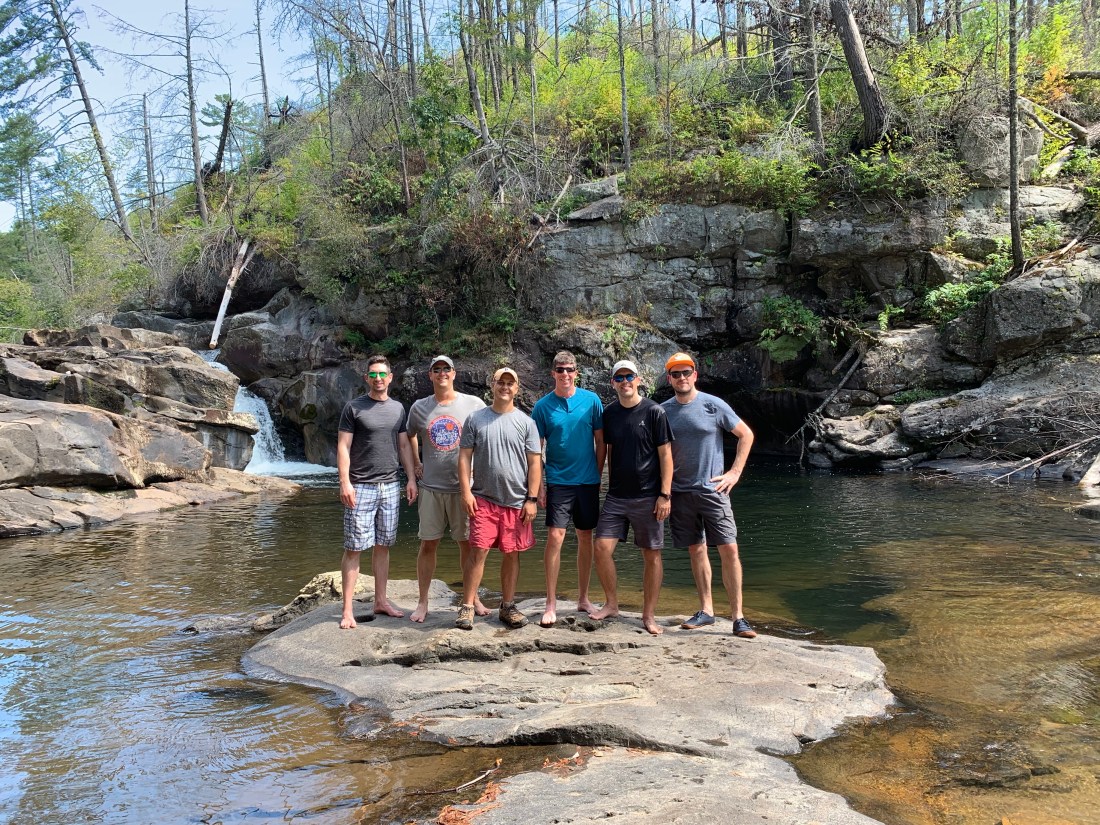
We started hiking around 4pm and logged four miles with several river crossings on the Jack’s River Trail before finding camp. The river is usually running fast and high enough to make for tough crossings. But the late summer in Georgia had seen little rain and the river felt more like a creek with knee high water on occasions. 

After a meal of Ramon bombs (Ramon noodles with potato flakes added in), we sat around and shared stories. There were six of us in total. Besides the one crank radio to pick up the UGA/Notre Dame game, we had no reason for electronics. One friend made the comment, “You know it’s so good we’re out here talking and there’s not one phone!” It was true. We had no cell coverage for the whole trip. 

After the conversation died down along with the fire, I walked down to the river and happened to looked up. For the first time in a while, I noticed the stars and it felt like I was back at my summer camp as a teenager where many nights I would leave the cabin and lay down on the ground and gaze. 

There was no light pollution, no car horns. A billion stars shined onto edges of the trees. And the sparkle of moonlight flowed down the river. Awe is a good word. For that’s what I felt. Awe at the handiwork and artistry of God. 

Whether I realized it or not, I needed a moment of awe and to be lifted out of screens and emails. I need to realized how incredibly unimportant I felt in the midst of grandeur and how little my problems can seem in the midst of the vastness of God. 

The Psalmist once declared, “When I look at your heavens, the work of your fingers, the moon and the stars that you have established what are human beings that you are mindful of them?” (Psalm 8:3,4). 

I think we’ve all known that pleasure of feeling small in the vastness of God. Those moments surprise us and lift us out of ourselves into a new place. 

I have good friends from my hometown who often tell me they love to go deer hunting. It’s usually not to kill a deer, but to sit in nature and watch it come alive. My new friend Roger probably wouldn’t like the hunting part, but I think we all get the need to be in nature. 

How might we learn nurture awe into our lives? In the midst of the pressure to produce, to parent, to lead, a little awe would do us some good. 

How do Christians respond to financial request?

Over the years, people have often asked me, “How do I respond to financial request from those in need?” It’s a good question and one that needs discussion. It hit home for me just recently.

Two Sundays ago, towards the end of my sermon, two women, a mother and daughter, entered the back of the sanctuary. They sat down on the last row. I recognized them because they tend to show up every couple of months. I knew they were there to ask our members for money. In God’s funny way, I was ending my sermon on showing hospitality to the stranger. It was a passage from Hebrews 13. This passage says that you might be entertaining angels when you welcome the stranger. As I was trying to stay focused on the sermon, I could feel the energy of the congregation moving to the back of the room towards our guests. The whole point of my sermon is that angels aren’t necessarily people flying around with wings, but regular people with a message for you. I wondered what sort of message our guests had for our faith community?

After the service, they did as I expected. They asked church members in the parking lot for money to fund their stay at a local hotel. I had an administrative council meeting right after church so I couldn’t really address the situation. The situation escalated. This mother and daughter wanted to speak with me. I was in the middle of addressing our our administrative council, which made it hard as our volunteers tried to balance interrupting the meeting with trying to find a faithful way to respond to our guests.

Thankfully one of our staff members spoke with them and explained we were in a meeting. These two visitors were not satisfied with our church’s response. They wanted to speak with me. When told to wait, they wound up calling our staff member some slanderous names and had some colorful things to say about our church.

Eventually, these guests left the premises. Church members have struggled with how one should respond as a Christian. If we were talking about radical hospitality, should we not open our doors and our wallets (or pocketbooks) more generously to guests in need? But how does one ensure they are not taken advantage of? Herein lies the heart of the dilemma.

To my Haygood family, I would simply offer these words: If you gave to these women, good for you. You were showing radical hospitality, the kind we had heard about in the scriptures. My encouragement in the future is to not give cash, but instead to find a staff member and we’ll work to find a faithful way to give. We have given to this mother and daughter before by paying for hotel rooms for the week. We make our payment directly to the hotel as we know by experience that cash be spent on other goods.

We do our best to be generous. But please hear me. If you feel in the moment, you must give and that it’s the right thing to do, who am I to prevent your good deed? Do as you feel led by the Holy Spirit. I’m simply here to tell you my experience is to inform the staff in order to ensure we are doing the most good as a church.

Several years ago, at a different church, we had another situation. We had visitors, two ladies, at our 8 a.m. service. We were so excited because normally you don’t have many visitors at the early service. Afterwards, I showed them around our church, including our offices. The next week, during the 11a.m. worship service, they stole our offering out of our business manager’s office. They had preyed upon our hospitality and scouted out where we put the money. We bought a safe the next week!

Jesus taught us to be wise as serpents and as innocent as doves. That’s good advice, but it’s still hard. Our gospel is about Jesus who was so often moved with compassion to help the most vulnerable people of his day. We are called to follow his example. It’s my prayer that we will not allow our hearts to turn to stone. Helping people is rarely easy or convenient.

One of my favorite stories is the story of the Good Samaritan from Luke 10. It’s not an easy story for the pastor types as we are the ones who pass by the person in need. Instead, it’s the Samaritan who notices. I always like to point out that this Samaritan decides to help as he comes near the hurt of the man in the ditch. He is moved in his inward being once he gets close enough to feel the hurt. That’s my prayer for us. Let’s continue to move close enough to the hurts of this world to care enough to help.

We are still committed as a church to help this mother and daughter. Indeed, I do think they were angels with a message. Our missions and outreach staff member, Wally Rice, has met with them. He has addressed that it’s unacceptable to slander our staff members who were simply trying to help.

I pray our church will continue to be one with a big heart. I’d much rather us error on the side of showing compassion and mercy.

I’ll leave you with this story of redemption. I hosted a “Dinner with the Pastor” gathering at our parsonage on Sunday night. We like to bring together Haygood newcomers and church members in our home. We had a good group. We also had plenty of leftovers. Given there were cookies involved, we thought about keeping them in our home. Instead, we brought the leftovers back to the church. The next day our custodial worker, Larry Williams, knocks on my office door.

“Pastor, I noticed all those leftovers in the refrigerator. I don’t want us to throw those out at the end of the week. That happens a lot. I know some people who might want them. Do you think I could take them if no else eats them today?”

I said, “Sure.”

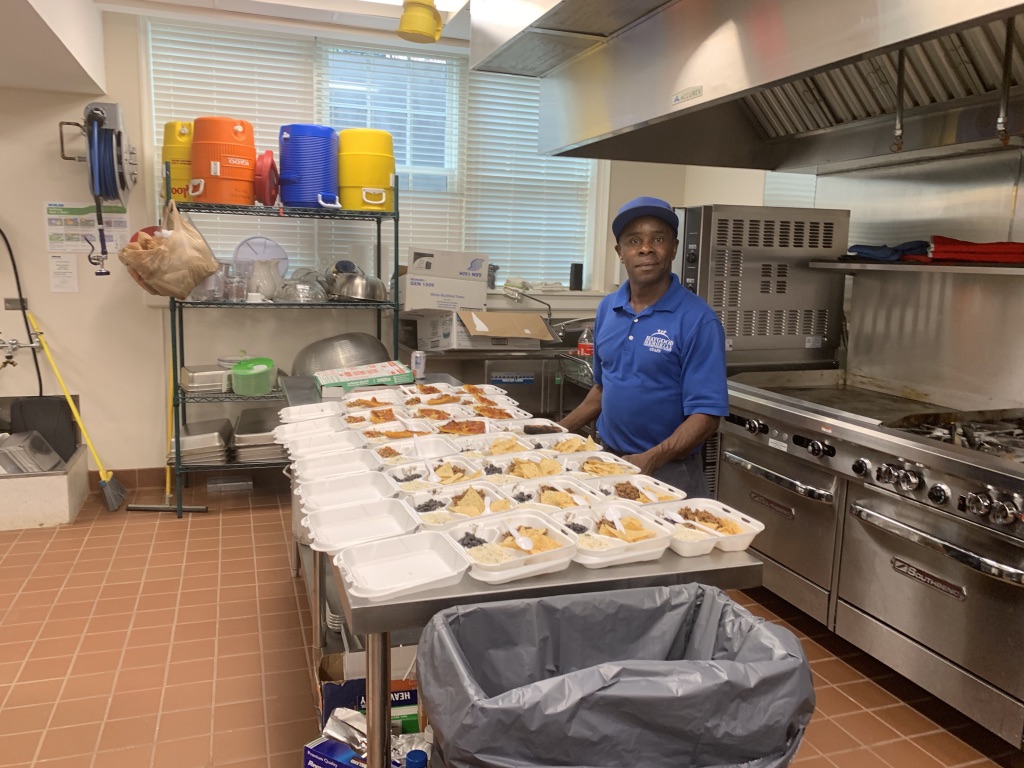
Later that afternoon, Larry had spread out all these to-go boxes and was filling them up with chips, tacos and salad. He took more than 30 of them to places throughout Atlanta where the homeless tend to gather.

Larry told me later, “I just drove around and when I saw someone who looked like they could use a meal, I said, ‘here you go. This meal is from you from our Haygood family.’ That’s all I did.”

In truth, the meal was really from a good-hearted person like Larry who takes seriously the call of Jesus to provide for the stranger.

So often, we make discipleship and preaching more grand than it needs to be. Sometimes we don’t have to start the non-profit to follow Jesus (sometimes we do). Sometimes it’s packing to-go boxes of tacos and heading out to the streets.


Spooked out by the Roman Colosseum

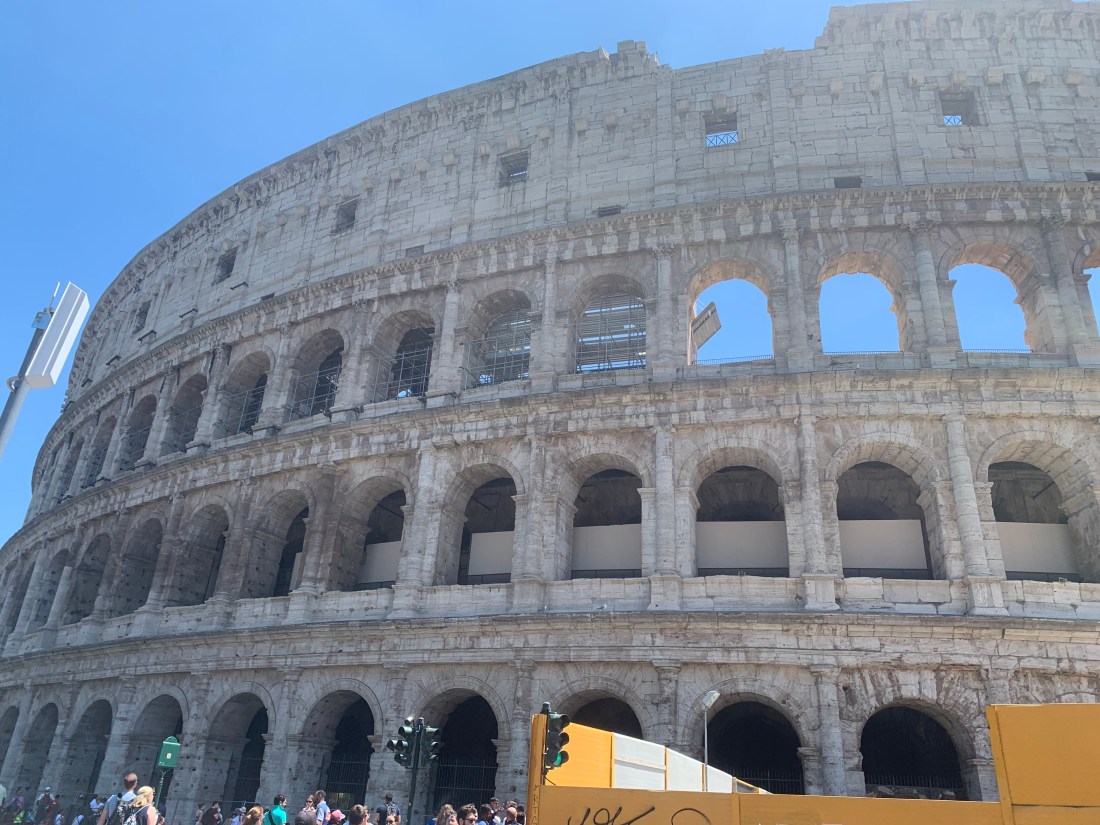
In June, our family traveled to Italy. Our last stop was in Rome. I wrote some reflections about our visit to the Roman Colosseum. To be honest, I was a bit spooked out as I walked through the door where the gladiators entered. Our tour guide (who was excellent) told us about the floor.

They filled it with sand because of how much blood was spilled. The morning was for hunting. They would have archers hunt down exotic animals. In the early afternoon were public executions. Hungry, starved and disoriented lions were released to kill the helpless criminals. In the afternoon were the gladiators.

The Colosseum was given by the Emperor Octavian to the people of Rome a gift. No admission fees were necessary. It was his way to rule. As our guide reminded us, “Powerful people have learned to give food and spectacle to the people to prevent uprising.” Blair leaned over to me and said, “That’s what the Hunger Games are all about.” I haven’t read them.

The Colosseum is the #1 tourist attraction in Rome. As we walked the grounds, I kept asking myself why. Do people flock to this site because of its architecture? As crazy as it sounds, as I walked around, it had the feel and atmosphere of a football stadium. But I felt strangely drawn to imagine what the gladiator must have felt and a bit guilty for imagining his doom. Many of them were captured soldiers from Roman wars.

I thought about the common Roman citizen who made plans all month for the event,  cheered at the sight of blood and death and then went home to say goodnight to his children.

There’s something awful and evil about our fallen human nature drawn to violence and spectacle. It’s why we love murder mysteries and why we feel the need for conflict to make life interesting. It’s one of those curious mysteries of human nature.

As we neared the end of our tour, our guide asked if we wanted to get a picture. We gathered with the full view of the Colosseum behind us. I wasn’t sure I wanted to be in it. I felt a bit awkward about smiling for a picture in such a place.

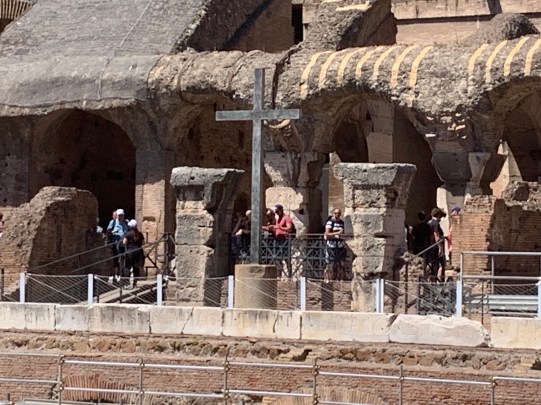
One of the more redemptive moments was to witness a Christian cross in the middle of the stadium. It stood as a monument to Christian martyrs. It’s likely there were no Christians killed in the Colosseum. During the persecution of Christians under the Emperor Nero, the Colosseum had not yet been built. The sign of the cross was to be a sign that the Christian message is one of peace. During the same century the Colosseum was built, this same Roman government crucified Jesus in Jerusalem. SpFUev8yRhmyDqA0j%X+Ig

Jesus called us Christians to a different life. As we walked out of the wide entry doors of the gladiators, I kept thinking about Jesus’ words, “the gate is wide and the road is easy that leads to destruction, and there are many who take it. For the gate is narrow and the road is hard that leads to life, and there are few who find it” (Matthew 7:13, 14)

Welcome the stranger. Turn away xenophobia.

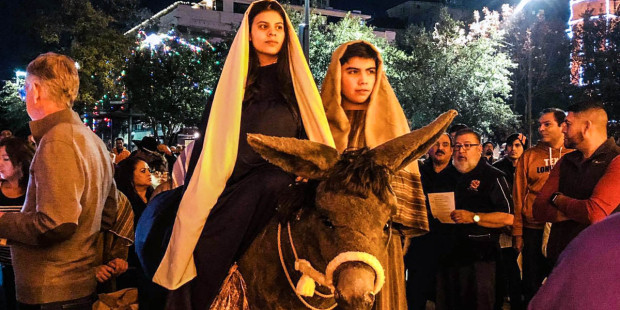
This past week, I was reading about a 400 year old Mexican Christmas tradition called, “Las Posadas.” This is a nine day event that remembers the hardships of Mary and Joseph as they traveled to Bethlehem. It begins on December 15 and concludes on December 24 and is a reminder of Mary’s 9 months of pregnancy. On the first eight nights, the community gathers and walks together to a different house. The members of these houses have been notified in advance. The leaders of the pilgrimage are church members dressed as Mary and Joseph. And when they arrive, they knock on the door and ask for a place to stay given that Mary is pregnant.  For eight nights in a row each house owner turns Mary and Joseph away. And then on the final night, the community gathers around Mary and Joseph one more time as they knock on the door.

This time, the owners welcome Mary and Joseph. The rest of the pilgrims are invited inside for a party. They celebrate with a piñata in the shape of the star that guided the wisemen. This final evening is this community’s way of celebrating the gift of hospitality. Mary and Joseph, in their hard circumstances, receive welcome.

WEB3-LAS-POSADAS-MEXICAN-TRADITION-Courtesy-of-Todays-Catholic-Veronica-Markland

I’ve never witnessed “Las Posadas”but I’m drawn to its message. The name means ‘the inn’ in Spanish. For one, I love the idea of the shared pilgrimage with all the characters getting to play a part. It helps us feel the drama. I’m also drawn to the way it helps pilgrims experience the rejection out of fear for their otherness.

More often that not, we neglect to show hospitality out of fear. We fear the stranger. We have word for that sort of fear. It’s xenophobia. We fear the people we don’t know or understand. Mary and Joseph experienced this rejection. This tradition seems to me an important one to embrace given the state of our world. We fear the stranger. We fear people who speak different languages, practice different faiths, ascribe to different political parties, identify with different sexual orientations, label themselves conservative and liberal. “Las Posadas” invites us to look beyond the fear and to experience the divine healing work of hospitality, the openness towards the stranger. The embrace of Mary and Joseph is the welcoming of Christ into one’s home and life. 

Whether it’s the border crisis in our own country or that new neighbor who moved in across the street, we need the message of “Los Posadas” more than ever. Because the real tragedy is that we’re missing out on the sacredness and healing we find in welcoming people. The writer of Hebrews suggest that we get to entertain angels when we assume the risk of welcoming the stranger. Whoever welcomed Mary and Joseph those many years ago into their stable welcomed two peasants in a hard situation with little in the way of monetary gifts to repay them.  But in that welcome, they entertained God without even knowing it.

When we embrace the other, the presence of God is ignited within our walls. As we hear the new stories and are opened to the new gifts the stranger will bring, both parties may find the healing they need as God works in and through them.


In our church, we’re on a kick to talk about hospitality. When we talk about hospitality, we’re not meaning Martha Stewart, although Martha could teach us a thing or two. It boils to a word that has come to have great power and meaning for our faith community. The word in the Greek language is “Philoxenia”. Philo means love and “xenia” means stranger. Philoxenia literally means to love the stranger. We find this word used six times in the New Testament. One of the more famous usages of this word is from Hebrews 13:3 when the writer encourages the people with these words:

“Do not neglect to show hospitality to strangers, for by doing that some have entertained angels without knowing it” (Hebrews 13:2).

1st Grade Open House

This morning was Katie’s open house and she is heading into first grade. And there’s little need to make the case for getting out the door on time. She’s up. Shoes on. Breakfast eaten. The Zant crew packs in the mini-van and off we go. Blair says to me, “You think we should walk? It’s not far and there’s probably no parking.”

“Nah. We’re fine,” I say.

We do two loops around the parking lot and Blair says, “This is why I was thinking we might want to walk.”

The last 24 hours social media has been a buzz with with parents posting about what teacher their child has, except me. I can’t figure out the Parent Portal. As we finish the half-mile walk to the school I try to play it off. “Katie, isn’t this cool? All your friends already know who their teachers are. You are the only one who will get to be surprised today. They won’t.”

We climb the steps with the other children and are thankful for the man with the clip board. For whatever reason, if you have a clip board in your hand, you have gained half my trust. He says, “Do you know her teacher?”

I didn’t want to admit my failures out loud for other parents to hear. (I’m a 3 on the Enneagram). So I silently shook my head no.

He said, “What your daughter’s last name?”

“Zant.”

“Oh, that’s easy. You Z’s make my life easy.”

I regained some confidence.

He says, “She’s got miss Clifton. She’s the best.”

He directs us to the room. I said, “Alright, Katie. Ms. Clifton.”

She said, “That’s not who I wanted.”

“Have you ever heard of her?”

“No.”

We walk down the hall with our Target bag loaded with school supplies. We meet Ms. Clifton. Katie is hiding behind my right leg. She is scanning for other kids she knows. There are none.

“Well, Katie, I’ve been so excited to meet you. In fact, I have your name on one of the cubbies in the back.” I can tell her brain is spinning. Blair and I share filling out the forms. I have to mark my interest in whether I’m to be a room parent. For all the reasons, I’m glad they don’t designate it ‘room mom’ but I’m not sure I’m up for it as dad. I see all the parents above me on the sheet and what they have checked. So I check, “Mystery reader. Field trip chaperone.” Feels good.

Like Katie does with the other kids, I’m looking around at the other parents wondering whether we’ll make acquaintances, wondering whether their kid might the bully. I look at Katie coloring at this point with a student she doesn’t know. And somehow it reminds me why all the butterflies.

You care for your kid. You’ve seen them smile and cry and discover they can do math and read. You hope they’ll be able to keep up and excel. But more than anything, you hope they make a friend in this new room, receive a few invitations to birthday parties at lunch and that Ms. Clifton will see a new gift we parents are too close to see in her. C.S. Lewis once wrote that between infancy and old age, “the most dominant element is the desire to be inside the local Ring and the terror of being left outside it” (The Weight of Glory). Maybe that’s the big hope and fear of this day for my precious 6 year old girl I have helped raise and watch grow. I tremble at the thought of her being left outside the ring. My prayer is that she and all her classmates will find their inner ring, their little gang. Lewis is right. From infancy to adulthood, we all want to be inside the local ring.

As we meandered through the hallway, I asked, “Katie, what did you think about Ms. Clifton?”

“Well, I didn’t know her, but I think she’s the best one.”

Thanks to Rev. Dr. Sheila Bookout

As I prepare to wrap up here today, I thought I’d send a quick note out. The church I serve, Haygood Memorial United Methodist, lost a dear person, the Rev. Dr. Sheila Bookout. I did not have the pleasure of knowing Sheila well. Our paths did not cross a whole lot in churches, but her passion and love for God’s church at Haygood is evident.

Dr. Bookout served as the senior pastor of Haygood from 2011-2016. Sheila suffered from chronic health issues beyond her control. This past week she died at an early age from those issues. I honor her today for the many sacrifices she made for this church. We have a newly renovated fellowship hall, office suite and outdoor plaza. Years ago, the downstairs facilities had become filled with mold. Apparently, it was not an inviting place.

She preached to the church that if they wanted a future, they needed to make a choice to raise the money to renovate. This big-hearted church responded to her leadership. Todd Stanton,  a Haygood member, ran the campaign. He shared with me that Sheila approached him about running the fundraising efforts for the renovation. Todd responded, “Sheila, I’m not sure I can make that sort of commitment.” Sheila quipped, “I gave a kidney. What’s your excuse?” Sheila gave a lot to this church, in body and spirit. In the renovation process she even made sure to put in televisions with access to Netflix which has saved me on many Sunday mornings when I have the kids here before service.

It’s often said that we all drink from wells we did not dig. That’s certainly the case here. She dug a lot of wells. A more Biblical way to look at it is from I Corinthians 3:6 in which Paul writes about the way God worked through him and another minister named Apollos. “I planted, Apollos watered, but God gave the growth.” Sheila did a lot of planting and we’re seeing God growing and doing some new things. I think it would have pleased her that on Wednesday, at our summer church picnic, we had more than a hundred kids and adults eating together outside on the plaza she dreamed about long ago.

As for my part, I’ll keep watering and planting on my seeds for this wonderful church. May God give the growth.


Think slow in a culture of fast. Reintroducing the notion of discernment.

I could hear him tapping on the computer keys at the library. He glared at his screen. We were supposed to be studying for our New Testament exam in seminary. But he couldn’t study. Why? His girlfriend just broke up with him. I was trying to be a good friend and get his mind off of her. I said, “What are you doing?”

“I’m emailing her. It’s my third draft.”

I said, “That’s a bad idea.”

He said, “Would you mind reading it?”

I did. He said, “What do you think?”

I said, “Imagine how good your grades would be if you put this much thought into your school work.”

“Seriously, Will. Should I hit send?”

Should I hit send?

We all have been there. Stuck. Unable to make a decision. Trying to make a wise decision. You want to make the right choice, but you’re not sure what the right choice is. There may be a lot on the line. Choices about our future. Choices about someone else’s job. Choices about whether to hit send on the email that you’ve typed and retyped all day long. Or it may be simple. If you’re like me, it’s helping my 4 year old decide which dress to wear to church even though you agreed on one the night before and you’re running late already and it’s raining and the AC is out in the sanctuary.

I had a friend once give me advice. He said, “Every day you have choices to make. The secret to life is just to choose to do the next right thing.”

On the surface, that sounded like good advice. Just make the next right choice, except for one thing. What is the right thing to do? It would be so easy if you could put on a pair of glasses that would show you what’s the right choice and what’s the wrong choice. It would come like a present wrapped in a red bow. But as you and I know, rarely does such clarity come on its own.

I’m reminded of a passage from I Kings 3:3-15 in which we learn about true wisdom. To give a little background, King David’s son Solomon is about to become Israel’s new king. King David was a man after God’s own heart and had served the Lord faithfully. He was given a vision to build the Temple for the Lord, but he the Lord would not let David build the Temple because he had too much blood on his hands.

The Lord visits Solomon in a dream. In an Aladin-like moment God allows Solomon to ask God for anything he wishes, which is an interesting moment. What would I ask for?

In his conversation, Solomon says to the Lord that’s he just a little boy and he’s not sure how to lead. In fact, he says, “I do not know how to go out or come in.” Maybe that’s one of the most important parts about leadership is understanding our limitations. The first thing Solomon does is admit his limitations. As we think about the choices we have to make, we can be lulled into thinking we are capable of making wise decisions, when in fact we need help. I’m sure I was that way my first few years of ministry. I lacked experience and needed wise counsel from seasoned ministers. But often I was self-assured and fresh out of seminary. There’s an old saying circled among pastors that you can tell a pastor who just finished seminary. You just can’t tell them much. 

Most famously, Solomon tells his wish. He says, “Give your servant an understanding mind to govern your people, able to discern between good and evil.” By no means was Solomon a perfect leader. In fact, in one of his first acts Solomon makes an alliance with Egypt’s pharaoh and marries his daughter, which would invite all sorts of problems later. And he would have concubines and build his own palace before the Temple. He had some issues. But in this moment, Solomon gets it right. The Lord gives Solomon a wise and discerning mind. This wisdom would be the hallmark of Solomon’s leadership.

Wisdom is a gift from God to Solomon. God gives wisdom to us. Sometimes, I fool myself into thinking I can make wise choices on my own. If I just think hard enough, write down the pros and cons on a sheet of paper, I can come up with the right answer. But true wisdom comes to us as a gift.

But the Lord also asks of Solomon to walk in his ways and to be steadfast in his devotion. In order to maintain this discerning mind, Solomon will also need to tend to his relationship and devotion to God. Wisdom and devotion walk together. Which means that our ability to discern between good and evil flows out of our relationship with God.

If you’re like me, oftentimes I get into a place of efficiency. I want to make quick decisions. Get the job done. Or I get into a place of reaction. I’m trying my best to respond to what my job or our world is throwing at me. If you’ve been on Facebook for 30 seconds, you’ll see the way our world nurtures reactionary postures. Even in our most passionate convictions, what would it mean to slow down and discern with God how best to respond? I like the words of the great spiritual writer, Henri Nouwen when he writes,

Christians cannot simply be persons who have well-informed opinions about the burning issues of our time. Their leadership must be rooted in the permanent, intimate relationship with the incarnate Word, Jesus, and they need to find there the source of their words, advice, and guidance.

I’m working on find ways to slow my mind down. One good way is baseball. I love baseball and it’s about slowest game you can watch! We took our two girls to the Braves game recently. I was thinking the game would be too slow for them. Oddly enough they were as relaxed as could be. I was too. Maybe in this midst of our frazzled, efficient life, we need more baseball to slow us down and let our minds escape and think and let God speak to us in God’s timing and not our own.

hsn3kur3thqf53drpuxgtg.jpg
The Zant crew at the Braves!

God gives us wisdom. In fact, the Hebrew word used in this passage for Solomon is that he asked for a discerning heart. Wisdom flows out of our hearts that seek communion with God.

Here’s the good news for us. Jesus, our savior, is alive and incarnate in our world. This Jesus will give to us the wisdom we need to discern between good and evil. Our relationship with Christ helps give us the glasses we need to see the world rightly.

Our decisions impact people. In the church I serve, our congregation is grieving the loss of Rev. Dr. Sheila Bookout who served as the senior pastor of Haygood from 2011-2016. Sheila suffered from chronic health issues beyond her control. Last week she died at an early age. Although I did not know Sheila well, I feel like I do. 

She embodied wisdom. During her early years at Haygood, three teenagers broke into the church. While in the building, the police report says they smoked pot, knocked over Christmas trees, broke ornaments, wrote obscenities on the walls, ripped out pages from a Bible, unwrapped presents meant for underprivileged kids in our neighborhood.

Our congregation was rightly angered and ready to call down fire from heaven on these kids. In fact, Elizabeth McGlamry, a church members, wrote an article in her high school paper, “I wanted to punch the little punks in the face.”

I gotta say, that’s how I would have felt. Stealing presents from kids. That’s probably how most of us would feel. Who wouldn’t feel that way? Get even with these teenagers. Teach them a lesson. Let’s lock up these church doors! But that’s responding out of emotions, out of anger.

But Sheila had a discerning heart. She had the wisdom to see beyond the moment and the emotion. And Sheila responded by saying, “It’s awful what those kids did. But we’re not going to let them deter us. We’re going to keep opening our doors to the community.”

Wisdom is seeing beyond the moment. Wisdom is thinking slow in a culture of fast. It’s making choices rooted in our devotional life. Solomon prayed for wisdom. Wisdom teaches us not just to react with our passions and emotions or fool ourselves into believing we can think our way out of our problems. Instead, we discern with our hearts, out of our devotional life with God. 


A night on the Beltline

Blair and I took time for a night out alone, a rarity for parents. We decided to walk along the Atlanta Beltline. We parked on a side road and could see Ponce City Market ahead. It was a cool night for July, somewhere in the 60’s. We even joked that the pumpkin spice lattes would soon be rolling out.

We love the Beltline if for no other reason than to people watch. I also love the outdoor art, the color and the city skyline. It’s not perfect. The Beltline has gentrified out a lot of persons of color. That’s something to work on. But the human spirit is alive in this place. The creativity of aspiring artist, the entrepreneurial types risking business ventures, the millennials playing flag football on the field near the Old Fourth Ward, the drummer banging away under the Freedom Parkway Bridge, the teenagers coming close to hitting us as they whiz by on electric scooters.

img_2026-1We did a progressive dinner, eating appetizers along the way. We ate our way down the Beltline and justified 3 scoops of Jenni’s ice-cream at Krogs Street Market because we had walked there.

We ate on outdoor plazas to enjoy the crisp weather and it reminded us of those piazzas in Italy in the hub of the city life. A young couple in their twenties next to us looked like they were on a date. No wedding rings. And the young man awkwardly reached for the bill on the table and she too seemed unsure if she should help with it. I told Blair, “I’m so glad we’re done with that stage of life. Dating is painful.” But we also secretly wished we could go back a day or two to our 20’s. We wondered how I was getting so close to 40 and where did our 30’s go?

I guess what stuck with me was walking among the people knowing that every emotion imaginable was alive…the excitement of teenagers who were visiting from out of town  and snapping pictures under the bridge with the graffiti, the exhaustion of parents in workout clothes strolling their infants, the warmth of a homeless man on a bike who smiled at us and kept singing, the hurt of the couple who didn’t seem to mind arguing in public. I thought, “These are God’s people. Every shape and size.”

I could not recall the number, but I knew that statistically the majority of the people would not have a church home or an active relationship with God. I kept reminding myself that God has something more grand in store for this creation. I was struck by the signs throughout the Beltline that said, “Common Ground.” That seems to be a good phrase for today’s people. With all of the hurt and wounds of our world, people seek a common place, a safe space for sharing life. As simple as it seems, there’s something comforting about people from all walks of life sharing common pavement, as a means not just of transport, but life.

As a pastor, I realize that for many people religion has become just another means for division and hurt. I want the people to be able to see fullest expression of God’s design for the world. God designed us for each other. God’s son, Jesus, came to heal and express a love that unites us in a common faith. So many people have seen the church show its judgmental side  which can leave can an impression that God’s nature is such. But in truth, our God is one of love and mercy. I’ve even thought about putting in big letters on the side of our church, “God is love.”

I’m reminded of Pope Francis’ words in his recent book when he writes,

“Sometimes, even from the Church, we hear, ‘too much mercy! The Church must condemn sin.”

He would go on to remind Christians that the church does not exist to condemn sin, but to show mercy. The church names sin and calls people to change, but the primary nature of God is mercy. As I looked upon all the people on the Beltline, I kept thinking about how much life was in this place. But I also know that these lives have hidden wounds and scars. Everyone of them. I want them to know that God’s nature is one of mercy for a wounded world and that mercy is wide-open to them.

Time was running short. We had to be home to relieve our babysitter by 9. We promised ourselves we wouldn’t wait for 6 months to do this again.

Something’s got to change

We all come to a place in our life where we realize that something’s got to change. It can be a big something or a small something.

For some, it’s making some big changes in your priorities. Maybe you decide you’re going to reignite your marriage, pay more attention to the kids, make time for date nights, no more missing dinners. Being busy seems to be the norm these days. When asked, “how’s life?” The number one answer seems to be, “it’s busy.” How might that answer change for us? How might our answer become, “It’s fulfilling. It’s rich. I’m living out my calling”? And I don’t mean in a superficial kind of way, but a real, authentic life that is filled with purpose. We all come to a place in our life where we wake up and realize we need to make some changes.

The past few months, I felt this sort of nudge to make changes in my health. I needed some exercise. The last few months I have started to rise at 5am. I have signed up for these exercise classes called “Hit” and “Burn” at the local gym. (I was hoping for one to be named something like “Breathe” or “Waterbreak”). Everyone in there is so fit! I’m the only out-of-shape one. The first day, I acted like I could exercise like it was 1999. That didn’t happen. And I’m the only guy in the class. I am always like 3 exercises behind the others. It doesn’t help my ego that afterwards in the parking lot, these ladies are hopping into their muscle cars and revving up the engine. Me? I’m waving from my mini-van.

Just the other morning, we had finished our workout. As we are filing out, our trainer is telling each person, “You killed it today. You rocked those burpees. You punched that workout in the face.” When she comes to me she says, “I’m glad you keep coming.”

Making changes can be hard. But we can make changes. A big part of change is about continuing to show up and to believe change can happen. If we believe it, people can change for the better.

In fact, that’s what the gospel is all about. Jesus came to change us by working in us. It boils down to one word. Believe. We have to believe we can change or else we will rarely try.

Just look at the lesson from the story of Jonah from chapter 3. To do a little review, the prophet Jonah is a runner. He continually runs away from his calling. God has called him to proclaim the message of change to this nation called Nineveh. The people of Nineveh are violent people. They have killed Jews and destroyed the Jewish temple. God wants them to change or else God is going to destroy them. So God calls Jonah. But Jonah doesn’t want the job. He flees on a ship in the opposite direction. The sailors throw him overboard because they realize they are about to sink because of Jonah’s disobedience. God sends a large fish that swallows Jonah and spits him out on the shore of Nineveh. God says to Jonah, “Get up Jonah and proclaim my message.” So Jonah sets off to the city and finally proclaims the message God gave him: “Forty days and Nineveh shall be overthrown.”

And how do the Ninevites respond? They believed. Here is a nation outside of the faith who believed a Jewish prophet named Jonah. They believe God’s word. They believed God when God said that he is going to ruin them in 40 days because of the ways they have hurt and destroyed. They didn’t think this message was an idle threat. They didn’t think Jonah was some silly ridiculous prophet. They saw a man willing to risk his life to deliver a message from God. They accepted and believed that they had been violent. They had killed. They had mistreated. They needed someone like Jonah to call them out on it.

For us to have real sustained change in our lives, we must believe whole-heartedly in the message. The Ninevites changed because they believed God’s message was true about their life. They didn’t respond, “That’s not us. We’re not like that.” Or, “You know, Jonah might have a point. Maybe we should roundtable his message for a while.” No, that’s not the tone of their response. The tone of their response is, “He’s right. We better get our act together. Jonah’s God means business.”

They believe it so much that they spread the word to their king. Miracle of miracles, he too believed.

As we think about those areas we want to change, we must ask ourselves, “What do we believe needs to be changed about our life?” That’s not the same question as, “What could we change? Or what might help?” The question is about belief. What do you believe God is calling you to change? Because here’s the good news. God wouldn’t call you to change unless God believed you actually could.

Then notice what this King of Nineveh does. He rises from his throne and removes his robe. His throne is where he wielded his power. And his robe signified his importance. In this moment, he steps away from his place of power and removes his robe of importance. Then he sits in ashes. He sits in the base elements of dust to which one day he shall return. It was dust that reminded him that if he didn’t change, he and his own country would soon be reduced to ashes.

He rises from his place of power. He removes his symbol of authority. He covers himself in ashes and sits. When we truly believe it’s time to change, we must be willing to rise from our thrones, remove our symbols of power and lower ourselves to the ground. If it’s time for us to make changes, we will need to sit in the dust. The people of Nineveh would turn from their violence. They would turn and make a change from their wicked ways. The Lord would show them mercy.

In the gospel accounts, Jesus once said that the only sign he would give the people was the sign of Jonah. The sign of Jonah was the sign of repentance. That sign meant that when the people heard the message that they needed to change, they believed and changed and God showed mercy. Jesus would call the people to change their heart and life by the message of his death and resurrection. Through this miraculous message, God showed them and us mercy.

My wife recently introduced me to the podcast “White Lies”. I couldn’t stop listening. It’s about these two men from Alabama coming to terms with Civil Rights movement and their state’s racist past. They researched the death of a white clergy man named Jim Reeb who came to Selma in aftermath of “Bloody Sunday” in 1965 on the Edmund Pettis Bridge. As Jim Reeb, a Unitarian minister, husband and father of four, left dinner one night in Selma, there were four local white men who hit him over the head with a billy club repeatedly. He would die a few days later. These men went on trial and were found not-guilty and set free.

More than 50 years later, these two journalist uncovered how the sheriff, the judges, the jury and the witnesses, covered up what really happened. The white community in this town knew the men on trial were guilty but they spun a web of lies to change the narrative. Eventually those lies turned to sustained belief in a false story. Do you know why the people in Selma couldn’t change? They were willing to believe in a lie rather than confront the truth of the past, which led them to believe that everything was fine. The past was the past. Water under the bridge. But what if that community had been like the King of Nineveh? Instead of covering up their history of violence, what if they had removed their cloaks of concealment and stepped down from their power to lay bare the deeds of the past? 

No doubt, Selma has made progress. The podcast celebrates that in the year 2000 the city of Selma elected their first African American mayor. But within weeks of his election, the city erected a bust and statue to Nathan Bedford Forrest, the first Grand Wizard of the Klu Klux Klan. The white community of Selma justified this monument by arguing that this was about honoring their heritage. If Selma honored the legacy of Civil Rights, they should also honor their Confederate heritage. 

The journalists interviewed a lady named Grace, an African American woman from Selma who was at the bridge on “Bloody Sunday.” They asked Grace whether she thought these election of this mayor and the bust of Nathan Bedford Forrest were related.

She said, “Now, you know you’ve already answered that question in your mind. But when I look at Nathan’s head up there, his mouth started moving. It says, you may have a Negro mayor, but we are still here.” 

We have made progress, but there’s still so far to go.

As hard as the past may be, God calls us to tell the truth of it. For it’s only when we believe in the truth of it that we can really change.

If we are brave enough to believe the truth, then change is possible. Sometimes, we need to get off our thrones and sit in the dust. We need to take off our robes of success that conceal the real problems underneath. That goes for anything in our life that needs to be changed. We will not change if we will ourselves to believe in the lie. If a person believes they don’t have a drinking problem, they’ll keep on drinking. If a person believes their marriage is fine and it’s not, they’ll keep on with the same bad habits.

It’s for these reasons we need people like Jonah to deliver the real truth from God. That’s why the people of Nineveh could change. They believed and accepted the truth about themselves.

The good news is we can change for the better. Real change is possible. As Jesus once said, “You shall know the truth and the truth shall set you free.” That’s why Jesus came. Because Jesus loves you and cares about your life. God is a God of mercy.

In the gospel of Luke, Luke tells us about a man named Zaccheus. He was a tax collector and he cheated people out of their money. One day, Jesus was passing by. He was short so he climbed a tree to see Jesus. Jesus said, “Zaccheus, come down. For I’m coming to your house today. ” Jesus played host in Zaccheus’ own house. It was when Jesus came into his home that Zaccheus was confronted with the truth about himself. He acknowledged that he had cheated people. Then he made plans to pay them back their fair share and more. 

Jesus said, “Zaccheus, salvation has come to you today.” Why did Zaccheus make a change? He believed in God’s message. The Lord brought joy and salvation to his life. 

Friends, change can happen when we believe in it enough. What do you believe God wants to change in our world, in our community, in your life? The folks from Nineveh believed in God’s call for change and God turned around their lives. God can turn around yours too if you can believe it!



Crabbing on the marshes of Glynn

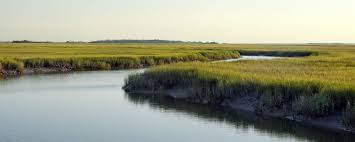
My daughter Katie and I just finished crabbing off a small bridge in the marsh on a drizzly day. We’re here on St. Simons Island. I remember my dad teaching me to crab off the same bridge years ago. We actually caught a couple which she named before dumping back into the winding inlet.

Our family is here a few days early before “Pastor’s school.” Family friends from Jackson were generous to let us stay at their place near the beach before we move over to Epworth by the Sea on Monday. Epworth is a Christian retreat center of the United Methodist Church. This is our family’s second year attending “Pastor’s school.” We had heard good things about it. It allows the ministers to engage in continuing education, while allowing our children to mingle with other ‘preachers’ kids.’ We’re still learning what it’s like for our children to be ‘pks’. My mother was one. She used to tell me about her and her sisters’ job as a ‘pk.’

My grandfather was a pastor in south Georgia. It was a tradition in many of those churches to have dinner on the grounds. In south Georgia, you had to be able to stand in line, fill your plate with fried food while simultaneously sticking out your bottom lip and blowing upwards to shew away the gnats.

Dinner on the grounds meant potlucks, a dying legacy in today’s church, probably for good reason. My grandfather instructed his four daughters of their role. After everyone had been served, they were to pass through the line and eat the from all the dishes that hadn’t been touched. That means the bad ones. My grandfather didn’t want them to feel left out. That was part of their life as a ‘pk’. Plop on the helpings of sour tomato pie and burnt okra.

In the Methodist world, the life of a ‘pk’ can be abrupt as ministers and families are constantly moving to new assignments. It’s our Methodist way, but it can be hard on the children as they uproot to new schools and leave behind friends.

Pastor’s school allows them to make friends that become a lasting sense of community. At least, that’s our hope. So we are here. In truth, we have served churches who have loved our children with great care, but life can be challenging for ‘pks’ often arriving at church long before Sunday school and waiting an hour after worship is over as mom and dad talk to one more person or squeeze in that one extra meeting. Thankfully i-Phones keep them entertained, but they’re no substitute for home or us.

It’s different to be on St. Simons these days. My childhood is wrapped up on this island. My grandparents helped run Epworth. My grandfather was the Epworth Superintendent and a good one. Apparently, he knew how to raise money and helped envision and fundraise most of the hallowed buildings overlooking the golden marshes on the Frederica River without any debt. He would always tell people that the secret to raising money was one word: ‘ask’. Of course, that’s not totally true. He did like to ask, but his success was built on his trust.

He loved the people and this place. He would walk the grounds each day and sought to interact with the youth groups and Sunday schools who were visiting for retreat. When my parents’ Sunday school and families visited, he gave us the special treatment by organizing a shrimp boil near near the tabby house under the oak trees with the Spanish moss. For us kids, he hosted an ice cream sundae social for us past our bedtime. He was a good man.

My grandmother offered her time at Epworth most nights in the cafeteria. Many people called her the ‘mo tea sir’ lady. She always carried a pitcher of sweet tea in her hand asking people if she could refill their drinks. For her, it was about hospitality. But more than hospitality it was her way of striking up a conversation and making friends. In one of Jesus’ miracles, he fed the multitudes with fish and loaves. I’m pretty sure had my grandmother been there, she’d have made sure they had tea.

She never tired of talking to people. She loved Epworth. I can recall many times walking past the tennis courts, near a big open field when she would spot a piece of trash 30 yards away. No matter the distance, she was going to pick it up. Every time I see a piece of trash at the churches I serve, I feel a twinge of guilt if I don’t pick it up.

Because groups visited Epworth from all across Georgia, many people knew her by name. I was always surprised how many people in my hometown of Jackson knew and loved her when she visited us at Christmas. It was like that in most places.

She died two years ago. We have no family left on this island. In fact, we have no family left in my home town of Jackson. I’m not sure the word that best describes that feeling of changes in our lives that happen in a drift more than a rapid current. But I feel it. On most visits to St. Simons as a kid, I hardly ever ventured to the tourist parts of the island. We made maybe one visit to the beach but rarely strolled through the village or climbed the light house. But this week, we’ve enjoyed the other side. We’ve ordered shrimp at the Crab Trap, hunted for sand dollars and ridden bikes along the marsh. It’s different, but the laughs of our two daughters remind that it’s still good.

We all have these moments where we move about the places of our past with thankfulness and sadness. As my daughter and I pulled up the crab basket, I watched for a moment the sway of the golden marsh and recalled the quote from the poet Sydney Lanier about this island that my grandmother had hanging in her guests bathroom, “Like to the greatness of God is the greatness within, The range of the marshes, the liberal marshes of Glynn.”

Most of us feel that sense of thankfulness and sadness when we visit places from our past that seem to be gone. But there’s always new life with the next generation in that same place. For the greatness of God in this place, I give thanks.