What Easter means to me this year

Easter is a few days away. Each year, I find myself asking, “What does Easter mean to me this year?” Each year, the Easter story has its own way of speaking. This year, the imagery of a garden comes to mind as the focus image.

Jesus was buried in a garden tomb. It makes me think about my own burial. I’ve never thought much about where I would be buried. I don’t have a plot picked out. I probably should. I recall one of my earliest jobs as a high schooler. I helped lay tombstone. It was hot, hard work, especially in Jackson, GA in the summer. Ralph Wilson was a great first boss. He owned the company. He’d always always take us out to a big lunch. You could always count on him to pay. (although it’s hard to work after you eat fried catfish, his favorite meal). I’ve tried to replicate his kindness to others as now I manage staff.

It was grueling work. But honestly, as crazy as it sounds, graveyards can be beautiful places. When we would set headstones, most of them included a flower pot. On several occasions I recall family members of the deceased pull up in the car to see our work. You could tell they had waited anxiously to witness the headstone in place. Whenever we installed a headstone, we would sweep it to make the sure the family had a good first impression. On many occasions, I watched as a spouse or child brought flowers for the pots. Many other times, I observed loved ones visiting other plots to change out the flowers for the season. It was always a beautiful gesture and a nice moment to break from shoveling the hard red clay.

Flowers evoke life. Fragile, temporal flowers stand in quite the contrast to heavy stone that must be placed with machinery.  Even with the flowers, I still get eery walking through a graveyard. But still, I’m glad they’re there. Graveyard flowers help remind us of life in the midst of death.

In John’s account of the resurrection, Mary mistakes the risen Jesus for the gardener. Although I haven’t done the research, I assume there were people entrusted to grow and nurture the flowers around the rock tombs. I assume they came early in the morning to water and trim before the heat set in.

Was Mary wrong? Could it be that Jesus, the risen savior, is the keeper of God’s new garden? It makes sense. Life began in a garden in Eden. Adam and Eve shared the duties of gardening in the early morning. They tilled and toiled. It was a place of purpose and innocence and a harmonic creation. But the garden is also where our first parents fell from grace. It was in the first garden that death entered the world through heir disobedience. As John Milton wrote about the fall in Paradise Lost,

Of that Forbidden Tree, whose mortal tast
Brought Death into the World, and all our woe,
With loss of Eden, till one greater Man
Restore us, and regain the blissful Seat.
In the same garden where life began, death was also born. It makes sense that Jesus is the new gardener to care for this new creation that has been redeemed by our Lord Jesus. The resurrection has helped us regain Eden.
The garden is part of our story. God entrusted us with life and with the lives of our neighbors. But there are times we have screwed up this garden. We have sown seeds of deceit and hate. We have allowed the weeds of our pride get in the way of God’s purposes. We have neglected to tend to the vulnerable people of our world and they have wilted from our lack of care. We continually make a mess of God’s garden. That’s why need our resurrected Lord as our gardener.

When the kids won’t go to bed…

Last night, Blair and I were putting the kids to bed, except that never happens. There is no ‘just’ putting the kids to bed. They argue for every reason to stay awake. “I need water. What about another story? You didn’t read it right. I need to brush my teeth again.” Even when we do get them into bed and threaten the loss of television for the next 18 days, there’s a set of doors they call the secret passageway.

Last night, after we switched off the lights, one of them snuck into her sister’s room. They didn’t try to hide it. They were dancing and singing and laughing in their favorite costumes! I told Blair that I didn’t want to be the fun police! Would she mind? To my surprise, she swung open the door and started singing and dancing along with them. Sometimes, you just have to let the joy happen.

How much are we willing to allow joy to happen? If people act too joyfully and look like they’re having too good of a time, other people get nervous!

This Sunday is Palm Sunday. What started off as a movement of 12 disciples has swelled into a caravan of joy among the multitudes! The people are shouting ‘hosannah’ as Jesus rides into Jerusalem on a donkey. You can sense the joy and anticipation in the air. Some of the Pharisees in the crowd bend Jesus’ ear, “Teacher, scold your disciples! Tell them to stop” (Luke 19:39). Throughout the gospel, the Pharisees grumbled against Jesus and his joyful movement of God to save sinners. In fact, Jesus often compares the work of God to joyful occasions: weddings, parties and banquets. The keepers of the law could not understand this type of work that broke boundaries and accepted people often considered unlovable.

On Palm Sunday, the disciples were swept up in the joyful commotion of God’s saving work. The keepers of the law wanted to squelch their excitement. Jesus responded, “If they were silent, the stones would cry out.”

As Christians, we are called to do what the Pharisees could not. We are called to let the joy of the Lord happen. In truth, we can all find ourselves fearful that joy can’t  happen. We can feel guilty about being joyful. But the witness of God is that joy can happen if we let it. Let the joy happen in our lives even when we can’t explain it. Let the joy happen even when we don’t think we deserve it. Let the joy happen in the sad times and the happy ones. Joy comes from the knowledge of God’s gift of salvation. Salvation has come for you and with it, joy! Hosannah, blessed is he who comes in the name of the Lord.

To help others heal, do something beautiful.

“I am about to do a new thing; now it springs forth do you not perceive it? I will make a way in the wilderness and rivers in the desert,” (Isaiah 43:19).

This past week, I traveled with church members to Mariana, Florida. We were there to remove debris from homes and yards affected by Hurricane Michael in October. The rest of my family was on a Disney Princess Cruise. This seemed to work out well for everyone. I love mission trips. You get to shirk the routine and share communal life with others. We were not in rush. We enjoyed extended talks as we carted off limbs and tossed them by the roadside. So often, we skim the surface with people in our daily interactions.

We met some kind people. One of my favorite stories was helping a lady named Sarah. Hurricane Michael must have knocked over a hundred oak trees on her property. When we arrived, we realized our work would feel like a drop in the bucket. We had two small chain saws. The best we could do was to cut the smaller pieces and limbs and drag them to the side of the road for FEMA trucks to pick up.

After you chainsaw for a couple of hours, you begin to feel the futility. We caught a glimpse of the futility one must experience after a hurricane. We decided we’d take a break and speak to Sarah.

She said, “This has been the hardest time of my life. Michael tore up our property. My 92 year old husband has dementia. I spend 48 hours a day taking care of him. I can’t take care of the yard. He used to take care of the yard. He had such a pretty yard. But now look at it. He used to sit on the back porch and watch the flowers and birds. He was so proud, a vet too.”

One of our church members asked, “Do you think he would like some flowers to watch during the day?”

“I sure do,” she said.

“Well, I don’t want you to look out everyday and see all those uprooted ugly trees. It will remind you of the storm. I want you and your husband to look out each day and see something pretty.”

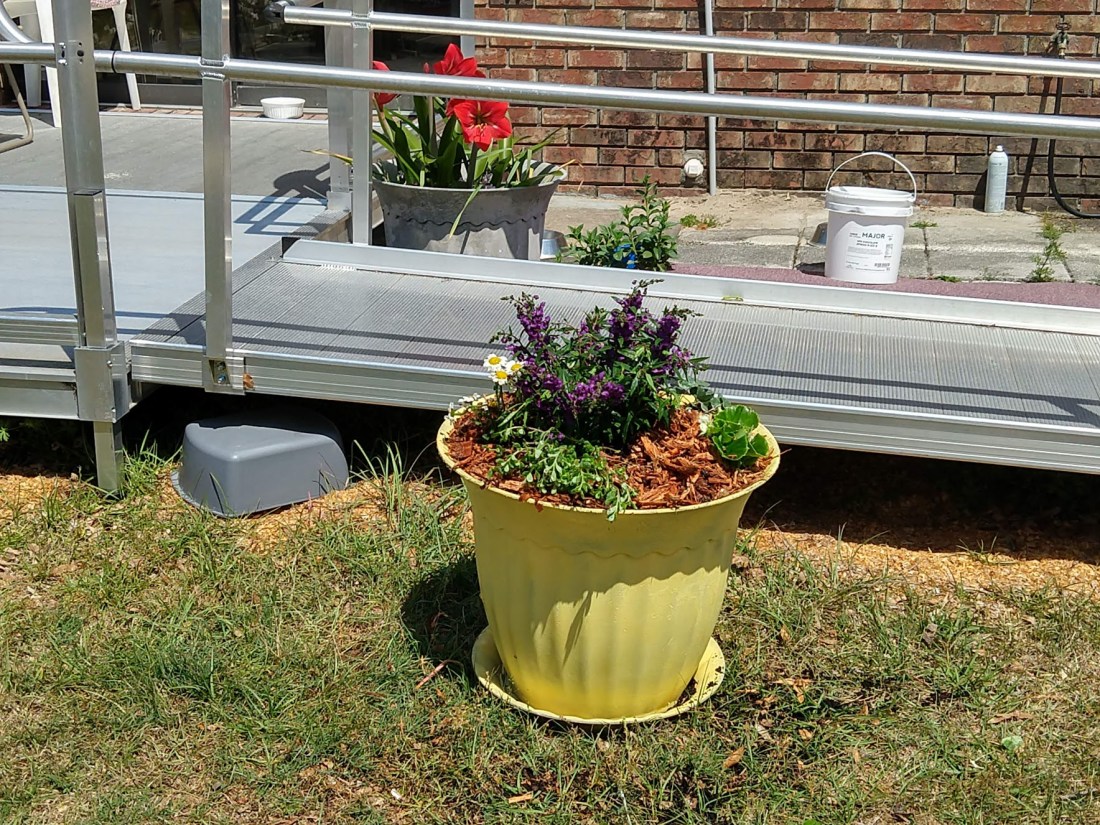
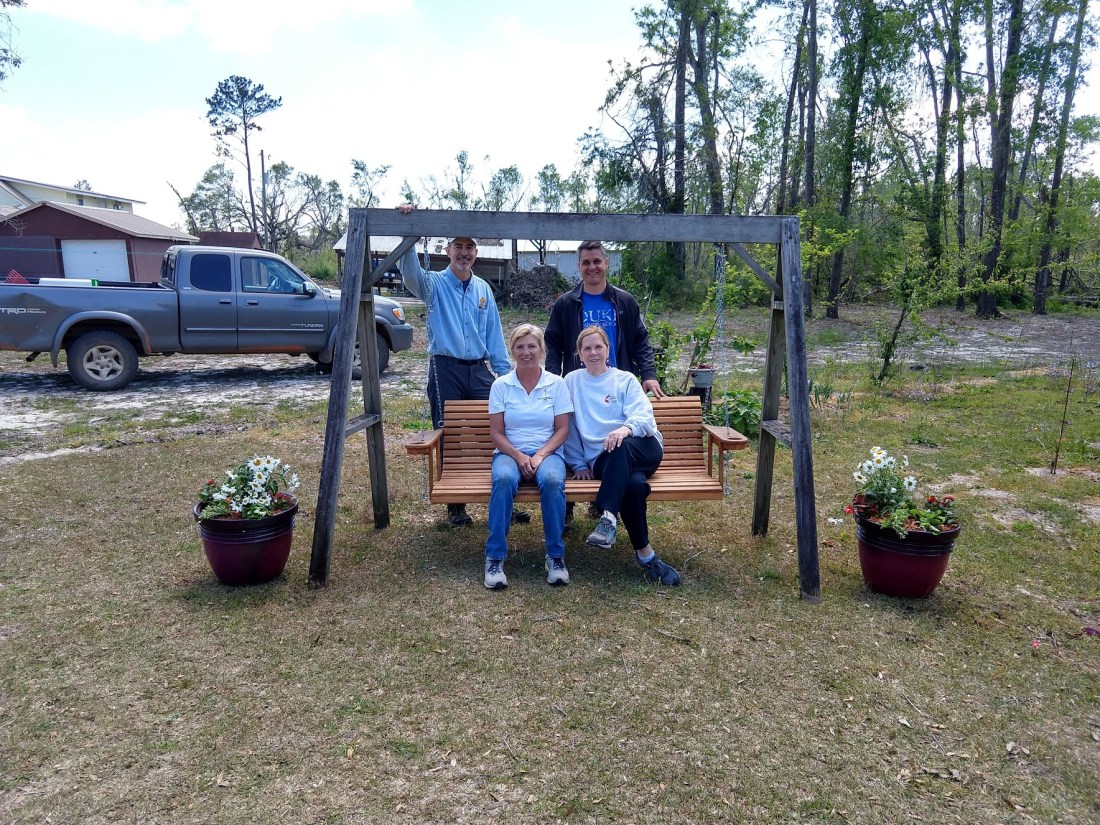
After a run to Lowes we returned with colorful flowers for pots. We moved the swing in the front yard and set it in the back. We spray-painted two faded flower planters a bright yellow. We dug around an oak stump and planted lantana and begonias. We relocated the bird bath to the center of our make-shift flower garden.

IMG_20190402_114908687_HDRIMG_20190402_115302325_HDR


IMG_20190402_114925407_HDRThis imagery sticks with me. We realized we could not haul away the hundred downed trees on her property. It’s likely she’ll never have those trees hauled off. But in the midst of the devastated, drab land, we could plant something beautiful to bring them joy and color. After a hurricane, plant flowers.


In Isaiah 43, the prophet is speaking to a congregation of Jewish exiles. They were living in a devastated land and faith. The Babylonians had exiled them as a means of punishment for their sins and their disobedience to God. But Isaiah proclaims hope to them in the midst of the devastation. He promises that rivers will flow in the desert and God will make a way in the wilderness.

As I think about people like Sarah, I think about people living amongst the ruins and the devastation. We can’t remove all the devastation from people’s lives, but we can bring something beautiful and inspiring to it. It could be a kind word or a visit. We can create and bring something beautiful everyday to help people find a way in the wilderness. To help others heal, do something beautiful.

That’s the imagery of Jesus’ cross. It was a devastating, ugly piece of wood planted in the ground. From this cross, God makes a way for us. On the cross, Christ forgave our sins. After three days, God leads us to the beauty of the garden where there is an empty tomb. There is resurrection and eternal life through Jesus for you.


The ‘e’ word.

How much time do we spend each day searching for what we lost?  If anyone needs a project, they can follow me around with a timer. I would guess at least 30 minutes.  It’s 5 minutes in the morning scouring the house for my wallet (It’s always in my back pocket from the previous day’s pair of pants). Then it’s the iPhone. “Blair, can I borrow your phone to call mine?” Every day. I spend more time looking for the remote than I do watching television. (I once found the remote in the refrigerator and the gallon of milk on the coffee table. It had been a long day parenting).  As I read Luke 15, I feel a little better.

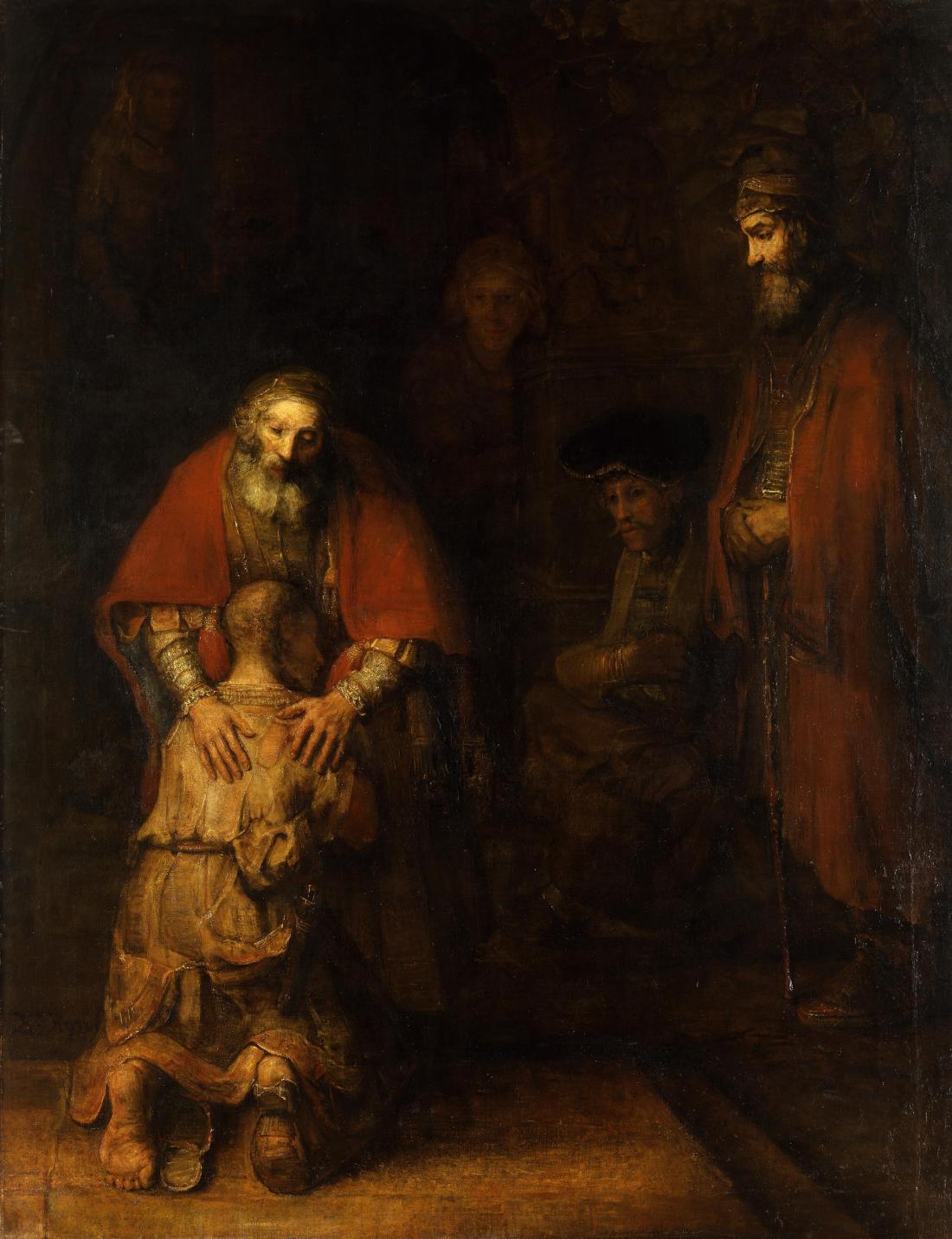
In Luke 15, Jesus tells a parable about a shepherd who has ninety-nine sheep and loses one in the wilderness. This shepherd spends his whole day in search of what’s he’s lost. Right after this parable, Jesus tells us another about a woman who has ten coins and loses one. She sweeps her house in search. I can imagine her flipping over the cushions and digging through the drawers. Then Jesus tells another story about a father who loses a son.

The youngest son is fed up with his dad! Who knows the reason? I’m not sure it matters. Parents and their children will at some point find themselves at odds with one another in a fundamental way. Perhaps it’s over divergent ideas about their career path, religious views or love interest. We’re not told why this young man leaves the care of his father’s home, but he does. When this young man waste his father’s fortune, suddenly his dad is not such a bad guy. He heads home. He’s prepared his speech. “Dad, you were right. I was stupid. I don’t know what I was thinking. I’m sorry.” But before he could get the words out of his mouth, the father races to his son and throws his arms around him. He beckons his servants to fire up the Weber and throw on some veal.

The dutiful older brother has some words for his father’s magnanimous, forgiving heart. “Drop dead dad! I’ve been nothing but loyal to you. You’ve never thrown me a party. And yet you kill the fatted calf for this waste of space son of yours.” But the father won’t give up loving either of his sons. He says, “We had to celebrate and rejoice, because this brother of your was dead and has come to life; he was lost and has been found.” In all three parables, the story ends with the celebration of finding what was lost.

We get a picture of what God does every day. God searches for what God has lost. We are God’s possessions. When we go astray, God feels the intensity of losing what belongs to him.

Just like us, God searches everyday for what God loses. But there is no need to follow God with a timer. God never stops. This story has made me ask myself a different a question. “How much time am I spending each day helping God search for what God has lost?” God came to seek out and save the lost. God came for sinners who have gone astray.

The heart of God is to search for the lost. It’s the ‘e’ word. Evangelism! Evangelism is a loaded word for many people. It conjures up people on street corners at sporting events with bullhorns. Whatever baggage ‘evangelical’ carries with it, the church must reclaim it. Evangelism is the good news that Christ who has come to seek out the lost and welcome home the weary and forgotten.

It might be good to put a timer on our evangelical efforts. The good news is that the more we search, the more we find. The more we find, the more we celebrate!


How much trauma can you handle?

We’re asked to respond to a new tragedy everyday. It’s wearisome. Through my social media feed I am flooded with news about the latest hurricane, plain crash, shooting. As a pastor, I  want to respond adequately but my responses often feel hollow. I also want joy, a laugh each day with our adorable kids. And yet one can feel the weight of the world’s  trauma delivered to you daily. How much trauma can one handle?

I remember after a shooting in Las Vegas, I could only muster up a “Thoughts and Prayers for Las Vegas” on my Facebook account. A friend messaged me and said, “Thoughts and prayers just aren’t doing it these days.” I understand the sentiment.

Once I learn about a tragedy, and prayerfully consider how I might acknowledge it, another one occurs. As a pastor, I often struggle with how much to preach about a recent tragedy. There’s a hesitancy to write a sermon too early in the week.  After a while, you become numb. When is there time to offer a message of grace to the dad out there in the fourth pew who just lost his job?

One practice that has helped me is the practice of lament. Lament slows us down. A lament is our way of complaining faithfully to God. The Bible doesn’t lack people who complain in their prayer life. The Bible can teach us to complain like a Christian. This coming Sunday, we’re looking at the story of Abram. In Genesis 12, God called Abram at age 75 to leave his home country for a new land. God promises to bless Abram and make of him a great nation. God promised to give his wife Sarai a child. In chapter 15 Abram has grown weary of God not fulfilling his promise. The Lord says to Abram, “Don’t be afraid.” But Abram is too frustrated to let it go. Abram responds, “Lord God, what can you possibly give me, since I still have no children?” (Gen. 15:2).

Abram is real with God. To be real and honest takes trust. In our prayer life, we can be real with God and bring forth our complaints. God is big enough to handle it. God doesn’t punish Abram for his griping. In fact, the Lord and Abram draw closer to each other through this exchange of real emotion. And through it, Abram trusted the Lord and the Lord recognized Abram’s high moral character (Genesis 15:6).

As we think about tragedy, what does it mean to be a people of lament as a faithful response? After witnessing tragedy and trauma, our emotions often become a tangled mess. To move too quickly to the next tragedy makes us numb to the suffering. We’re not able to deal with our real emotions. Our prayers become nothing more than simple thoughts. Lamentation slows us down and helps us feel, helps us have our heart punctured so that we don’t just move on. Noted theologian Dominique Gilliard writes on this topic,

We can’t take time to lament because we are constantly processing new tragedies.

Nevertheless, before we truly grieve one tragedy, another occurs. So in our rush to keep up with our newsfeeds, with the latest scandal, the newest tragedy, we move on before processing the trauma we have just witnessed. We move on to stay up to date — and in part, because we believe that our minds and our hearts, like our smartphones, can hold only so much.

Lamentation, however, forces us to slow down. In the midst of daily tragedy, lamentation requires us to stay engaged after the cameras and publicity move on. It summons us to immerse ourselves in the pain and despair of the world, of our communities, of our own sinfulness.

I’m thankful for the congregation I serve. After Hurricane Michael last fall that ploughed through Florida, our congregation decided to send a team to help. We’re heading out over spring break to Marianna Florida to do some relief work. It’s a way for them to get out of their head and into their hearts. It’s a way for our church to be on the ground and to hear the stories of those affected. It’s a way to lament and feel the fulness of the human experience with all its hurt and hope. It’s a way to experience the pain of the cross and the joy of the resurrection.


Belly Cry over General Conference

I’m three days removed from the General Conference in St. Louis. It was nice to start a new month and to see signs of life in the flowers shouldering their way through the earth crumbs. But like many people in the United Methodist Church, I’m still hurting. It feels like spiritual PTSD. I’m hesitant to make this comparison in respect to those who have suffered through real war, but it’s the best I can do. St. Louis was traumatic. I had hoped the One Church Plan would pass. It didn’t.

When I came home on Wednesday afternoon, I found that I had an empty house for a few moments. I was exhausted and left my suitcase downstairs. My wonderful wife encouraged me to get some rest. I was determined to get a 15 minute nap before heading to Wednesday night activities. Then the tears began to flow. It was a cry that I could not explain, a belly cry. It was a moment that reminded me of Joseph in Genesis 45 when he encountered his brothers who had sold him into slavery.

Then Joseph could no longer control himself before all those who stood by him, and he cried out, “Send everyone away from me.” So no one stayed with him when Joseph made himself known to his brothers. And he wept so loudly that the Egyptians heard it, and the household of Pharaoh heard it. (Genesis 45:1-2). 

It was one of those cries where Joseph felt the years of suppressed hurts and abandonment puncture his heart all at once. It was his cry that remembered the good nights from his boyhood sitting around a dinner table with his dad and brothers. It was a cry that remembered the day he looked up from a pit at his brothers cashing in for his life. It was a cry that remembered the voice of Potiphar’s wife falsely accusing him of an affair and the clashing of chains from being thrown into jail in a foreign land. It was a cry too of hope that maybe there could be days ahead when he could forgive these brothers for their evil and love could return.

My cry felt like that on Wednesday. It was a cry that remembered the good days of entering the ministry of my home conference and being embraced by the some of the very people for whom today I feel so much anger. It was a cry that remembered the great love of the Ugandan people with whom I shared life, struggle and joy with for 12 weeks when I was in seminary…where I was embraced and loved and changed. It was a cry of finding myself at odds with people I love. It was a cry that remembered the faces of LGBTQ persons at this conference as they shouted from their souls to be heard. It was a cry that remembered how they sung with joy even as their hopes collapsed around them as the Traditional Plan was adopted. All I could think, “God, I didn’t know the pain. God, I didn’t know.” It was a cry that I couldn’t control or understand.

Maybe for the first time, I felt a piece of the hell our LGBTQ community has felt. I cried for a minute and felt in that minute what many have felt for a lifetime. The institution that should have accepted them the most, didn’t.

Where do we go from here? I’m praying about whether to offer the olive branch or draw the sword. I imagine many of us are struggling with the same emotions. This I do know. It’s time for centrist like me to quit playing referee and get onto the field of this great struggle over human sexuality. My prayer is that our brothers and sisters from the WCA can feel the pain these actions have caused and understand that there are other ways of reading the scriptures we both love.

The good news of Joseph’s story is that it ends in reconciliation. God’s providence brought forth a future. Joseph gave over his anger. He said to his brothers,

“Don’t be afraid! I have no right to change what God has decided. 20 You tried to harm me, but God made it turn out for the best, so that he could save all these people, as he is now doing. 21 Don’t be afraid! I will take care of you and your children.”  (Gen. 50:20-21).

Maybe, in the midst of this Methodist mess, God can make it turn out for the best, so that he could save all these people, as he is now doing.


It was a tough day, but there’s hope.

To all my non-Methodist friends, please be patient with me on this UMC lingo. Here’s a quick report from General Conference from today in St. Louis. In our session today, the “Traditional Plan” passed and the “One Church Plan” did not. I have advocated for the “One Church Plan” time and again as I think it gives flexibility to our churches and keeps the United Methodist Church from splitting. It would keep beloved ministries of our connection like Camp Glisson in tact! There is a chance it will be brought back up tomorrow, but for now it’s defeated.

It’s looking like tomorrow the “Traditional Plan” will be struck down because it is largely unconstitutional. However, there are two other “dissociation” provisions for churches that will likely pass tomorrow and be in line with the UMC constitution. It’s often referred to as a ‘gracious exit.’ What this could mean is that individual churches can vote to leave the denomination and take their property and assets with them.

I have heard reports for months that groups of churches and clergy are planning to exit the United Methodist Church as soon as the ‘exit strategy’ is passed. I’m a bit sad by all of this. I have no plans of leaving this church that has given me so much in my life. In fact, today I met some men from South Georgia who knew my grandparents and their ministry at Epworth by the Sea. It brought back fond memories of my grandparents’ gift of the church and Jesus to me. Being a United Methodist is a big part of who I am. As much as I disagree with some of the people I suspect might be leaving our denomination, I also love them. It will be sad to see them go. I was especially saddened to see the faces and social media post from gay friends who were disillusioned with the church’s defeat of the “One Church Plan.” They feel the church does not care about them or accept their call into ministry. The pain is real! That’s why this conference is hard.

But I’m also at peace. God could be doing something new in the midst of all of this. Jesus is still on the throne. I had a chance to visit with Candler students in a hotel lobby tonight. There were tears, prayers, music and laughter. They gave me bright hope for tomorrow. The Holy Spirit is still blowing upon the church.

It’s hard to love sometimes.

It’s been a long day. It started off with helping lead worship at Haygood. I love my church. Our District Superintendent preached for us. He did an amazing job. At least that’s what I have to say, right Mike? It really was a great sermon on Jesus praying for us in John 17. Our music ministry knocked it out of the park.

I had to book it out of church to make my 2:00pm flight for St. Louis. Had there been a long red light on the way to the airport I might not have made it! But I did. I’m here in St. Louis observing General Conference of the United Methodist Church. Our delegates are here to make a decision about the church’s beliefs on human sexuality.

I got to my seat around 3:30 pm and a group of LGBTQ persons marched in step around the perimeter of the conference singing “Hate divides. Love provides.” Earlier in the day, the conference voted on their priorities of issues to address. Many saw this vote as sort of a straw poll of what plan will pass. (For more information about the plans, check out UMC.org). The number one vote-getter was (wait for it) the future of our pensions plan. In essence, the church wants to talk about money and what churches will be able to take with them should they decide to leave and break up of our denomination. The world is watching and our first priority was not theology, not unity, not even the Bible. It was money, plain and simple.  It was not one of our better moments.

I gain a sense the people are beginning to feel as though we have to come this place to witness a divorce in our church. There’s a foreboding mood. I’m not there. I do feel like there’s hope tomorrow. Tomorrow we’ll consider all the plans we have heard about over the last three years. My own hope is we’ll choose the One Church plan that allows some flexibility in how our churches decide to move forward. It allows for churches who have a more traditional view on marriage to stay their course while also allows other churches to marry same-sex couples. To me, it’s the only way we the United Methodist Church can stay together.

It’s hard not to get sour. I mentioned to a friend that my devotion from this morning was I John 4:16, “God is love, and those who abide in love abide in God, and God abides in them.” She said, “Isn’t that just like God?” There’s part of me that doesn’t want to love right now. One the way out of the building there were protesters from Westboro Baptist Church yelling all sorts of slanders against gay people. (I guess you’re doing something right when they show up.) With all my being I want to tell those delegates in the United Methodist Church set against the full inclusion of LGBTQ that the UMC will be viewed by future generations in a similar way to those protesters from Westboro. That’s not the church God has called us to be.

It’s hard to love. But love, I must, if I’m to be a disciple of the one we call Jesus. Joy cometh in the morning.

Prosperity According to the Gospel

I’m challenged by the scripture for this week’s sermon. It’s Luke 6:20-26. He tells his disciples, “Blessed are you who are poor…blessed are you who are hungry…blessed are you who weep now.” Jesus calls the hurting and the vulnerable of the world “blessed.”

And then Jesus has some hard words for the powerful of the world when he says, “Woe to you who are rich…woe to you are full…woe to you who are laughing.”

Luke’s gospel shows us time and again God’s plan to turn the world upside down. If I’m honest with myself, I belong in more of the latter categories. By the world’s standards, I am rich. I have two cars, a house, two college degrees. We have enough food to feed a football team in our refrigerator.

We hear the word “prosperity” thrown around a lot these days. American prosperity seems to me to be rooted in the accumulation of wealth, goods and services. I’m guilty of such pursuits. Jesus is putting people like me on notice. It’s clear that God is on the side of the poor. He calls them blessed. Prosperity according to the gospel is not defined by wealth. God’s notion of prosperity is found in seeing people as God sees them.

But there’s good news in the bad news. The good news is we can make changes and reset priorities. God has called for a reversal of how we use our resources. In my own devotional life, I’m thinking about the season of Lent (the forty days between Ash Wednesday and Easter) as a time to support more initiatives to help the poor of the earth. It’s my hope that God will help me see more clearly and lovingly the people he calls blessed.


Make a splash church!

The ‘splash’ sound has been a sound I have loved throughout my life.

I love the splash of a basketball net! I remember many nights as a kid shooting on the goal at the end of our carport. The best sound in the world was to hear the ‘splash’ of the ball ripping through the net. In fact, I was picky about which nets I chose. Some made louder noises than others.

I love the splashes of the pool! My friends and I had a game growing up. We would try to rock the pool. We would line up at the diving board. Each of us would take a turn making a splash with a cannon ball until the whole pool rocked!

And I love the splashes Jesus made in his ministry. In a story from Luke 5, Jesus was standing beside a lake. He told one of the fishermen named Simon to set out into the deep part of the lake in his boat and to let down his net. Simon replied that he and his fellow fishermen had fished all night long and had caught nothing, but he was willing to give it a go. Simon let down his nets. To his surprise, he has to call others to help. As they strain to pull in the catch they are worried they’re going to break the nets because there are so many fish. Can you hear the splashes of the hundreds of fish as the net reaches the surface? Jesus knew how to make a splash. Jesus would call Simon to catch people from that point forward.

When we follow Jesus and reach new people, we need to make a splash. Rock the boat a bit and send waves into the community. Jesus made splashes everywhere he traveled. It was hard to miss Jesus. People were being healed, fed and raised from the dead. On many occasions, his presence incited rebuke and disdain. Whether people agreed with him or not, you knew Jesus was in the area.

For the modern church, Jesus has called us to make a splash. It’s time to let our communities know God is up to something. Stir up the church to get behind a Habitat House. Organize the youth and parents for a community movie night. Commission new people to sort clothes at the local shelter. Tell the good news of Jesus’ love in a local park. Whatever we do, there needs to be some noise, some activity, some pulling in of nets. Set out into the deep. Make a splash church.